Navigating 2025 Health Benefits: Your 3-Month Open Enrollment Guide

Anúncios
Navigating 2025 health benefits open enrollment demands careful planning to understand upcoming changes, choose appropriate plans, and ensure continuous, affordable coverage for individuals and families.
Anúncios
As the calendar pages turn towards autumn, the critical period for Navigating 2025 Health Benefits: A 3-Month Outlook on Open Enrollment Changes rapidly approaches. This is your essential guide to understanding what lies ahead, ensuring you are well-prepared to make informed decisions about your healthcare coverage for the coming year. Don’t let this crucial window pass you by without a strategic plan.
Anúncios
Understanding the 2025 Health Benefits Landscape
The landscape of health benefits is constantly evolving, influenced by legislative updates, economic shifts, and changing healthcare needs. For 2025, several factors are anticipated to shape the options available during open enrollment. Being aware of these overarching trends is the first step in making the best decisions for yourself and your family.
One significant area of focus continues to be the affordability of care. Policymakers and insurance providers are continuously seeking ways to balance comprehensive coverage with manageable costs. This often leads to adjustments in premium structures, deductible amounts, and out-of-pocket maximums. Understanding these core components of any health plan is paramount.
Key Regulatory Updates to Watch
Each year brings potential regulatory changes that can impact how health plans operate and what they cover. For 2025, attention should be paid to any modifications in the Affordable Care Act (ACA) marketplace, Medicare, and Medicaid. These federal programs often set precedents that influence private insurance offerings.
- ACA Marketplace adjustments: Look for changes in subsidy eligibility or calculation methods that could affect your premium tax credits.
- Medicare Advantage developments: New benefits or revised enrollment periods for Medicare Advantage plans might be introduced.
- Medicaid expansion status: While largely state-driven, federal encouragement for Medicaid expansion could influence access to care in certain regions.
- Prescription drug pricing initiatives: Ongoing efforts to control prescription drug costs could lead to new formularies or pricing models.
Staying informed about these potential regulatory shifts will empower you to anticipate how they might affect your current or prospective health plan. Resources from official government websites and reputable healthcare news outlets can provide timely updates.
In conclusion, the 2025 health benefits landscape will likely present both familiar challenges and new opportunities. Proactive research into regulatory changes and a general understanding of market trends will be crucial for effective open enrollment planning.
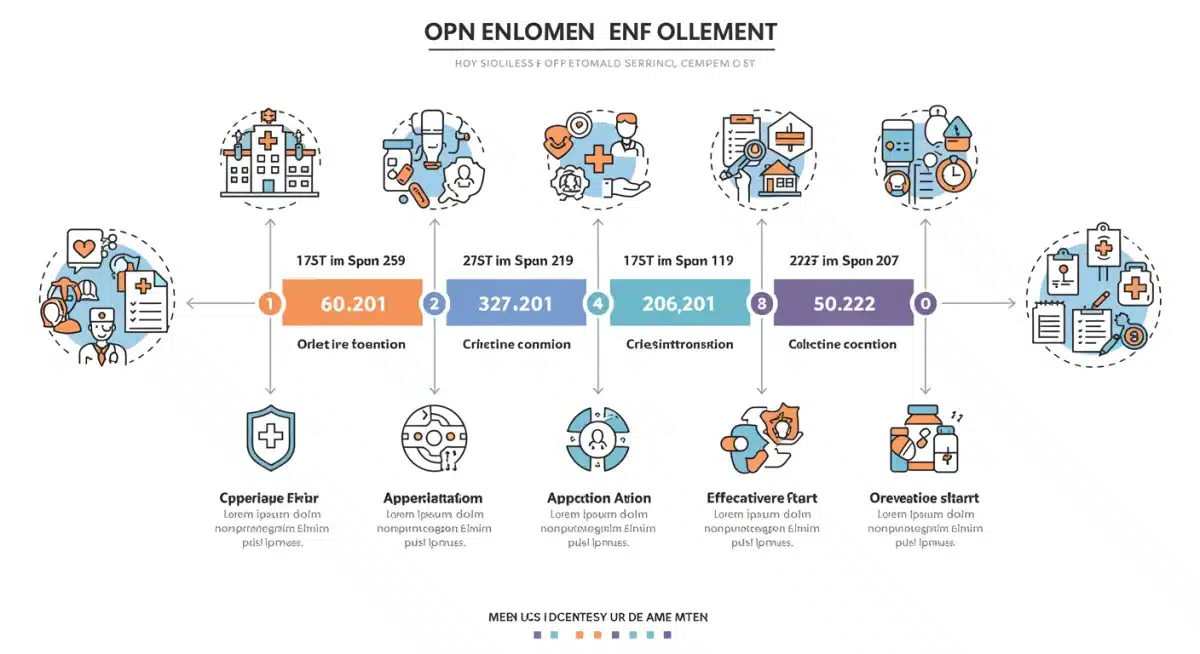
The Critical 3-Month Countdown: October, November, December
The open enrollment period typically spans just a few weeks, making the three months leading up to it incredibly important for preparation. October, November, and December each offer distinct opportunities to gather information, compare plans, and ultimately enroll in the best possible coverage for 2025. Missing this window can lead to significant gaps in coverage or higher costs.
Many individuals tend to rush through the enrollment process, often selecting the same plan year after year without a thorough review. This can be a costly mistake, as plans change, personal health needs evolve, and new, more suitable options may become available. A structured approach to these three months can alleviate stress and lead to better outcomes.
October: Research and Initial Assessment
October is your prime month for foundational research. Before plans are officially released, you can start by reviewing your current health needs and financial situation. Consider any changes in your health, family status, or income that might impact your insurance requirements.
- Review current plan performance: Assess how well your 2024 plan met your needs. Did you hit your deductible? Were your preferred doctors covered?
- Estimate 2025 healthcare needs: Anticipate any planned surgeries, new prescriptions, or changes in family size.
- Understand financial capacity: Determine your budget for premiums, deductibles, and out-of-pocket costs.
- Research general market trends: Look for news on premium increases, new insurer entrants, or changes in popular plan types.
This preliminary work will create a baseline for comparing new plans once they become available. It’s about understanding your personal healthcare story and what you truly need from a plan.
November: Plan Comparison and Expert Consultation
With plans typically becoming available in early November, this month is dedicated to detailed comparison and seeking expert advice. This is where your October research pays off, allowing you to filter through options more efficiently.
Don’t rely solely on online tools; consider speaking with licensed insurance brokers or navigators. These professionals can offer personalized advice, explain complex terminology, and help you understand the nuances of different plans. They often have access to a wider range of plans than you might find on public exchanges alone.
Comparing plans involves more than just looking at premiums. Dive into the details of deductibles, co-pays, co-insurance, out-of-pocket maximums, and prescription drug formularies. Check if your preferred doctors, specialists, and hospitals are in-network for each plan you consider.
December: Final Decision and Enrollment
December is the month for making your final decision and completing the enrollment process. Ensure you meet all deadlines to avoid any lapse in coverage. Even if you are happy with your current plan, it’s wise to re-enroll or confirm that it will automatically roll over, as terms and conditions can change.
Double-check all personal information during enrollment to prevent delays or errors. Confirm the effective date of your new coverage. If you are switching plans, understand the process for discontinuing your old plan and initiating your new one. This ensures a seamless transition without unexpected bills.
By diligently following this 3-month countdown, you can approach the 2025 open enrollment period with confidence, securing health benefits that truly meet your needs and budget.
Key Changes Expected in 2025 Health Plans
Anticipating specific changes in 2025 health plans can help you prepare for open enrollment. While the full scope of modifications will only be clear closer to the enrollment period, certain trends and policy directions suggest areas where changes are most likely to occur. These can range from adjustments in covered services to new provider networks.
One common area of change involves prescription drug coverage. With ongoing efforts to manage drug costs, plans may alter their formularies, co-pay tiers, or requirements for prior authorization. It’s crucial to verify that your essential medications will remain covered at an affordable rate under any new plan.
Potential Adjustments to Cost-Sharing
Cost-sharing mechanisms, such as deductibles, co-pays, and co-insurance, are frequently adjusted by insurers. These changes directly impact your out-of-pocket expenses. For 2025, some plans might increase deductibles to keep premiums lower, while others might adjust co-pays for specialist visits.
- Higher Deductibles: A common strategy to reduce monthly premiums, but means you pay more before coverage kicks in.
- Varied Co-pay Structures: Different co-pays for primary care, specialists, and urgent care may be introduced or altered.
- Co-insurance Changes: The percentage you pay for services after meeting your deductible could shift.
- Out-of-Pocket Maximums: While federally capped for ACA plans, individual plan maximums can vary and may be adjusted.
Always review the Summary of Benefits and Coverage (SBC) document for each plan you consider. This standardized document provides a clear, concise overview of what the plan covers and what you’ll pay.
Beyond cost-sharing, watch for changes in provider networks. Insurers may add or remove hospitals, doctors, and specialists from their networks. If you have established relationships with healthcare providers, confirm their continued participation in any plan you’re considering. This foresight can prevent unexpected out-of-network costs.
In summary, 2025 health plans are likely to see various changes, particularly in cost-sharing and prescription drug coverage. Detailed review of plan documents and network directories is essential.
Maximizing Your Benefits: Strategies for 2025
Simply enrolling in a health plan isn’t enough; maximizing your benefits involves strategic utilization and understanding the full scope of your coverage. For 2025, a proactive approach to managing your health benefits can lead to significant savings and better health outcomes. This means looking beyond just the monthly premium.
One key strategy is to leverage preventive care services. Most health plans cover a range of preventive services, like annual physicals, screenings, and immunizations, at no additional cost. Utilizing these services can help detect health issues early, potentially preventing more serious and costly conditions down the line.
Understanding Your Plan’s Features
Each health plan comes with a unique set of features, some of which are often overlooked. Take the time to understand everything your plan offers, not just the basics of doctor visits and prescriptions. This might include wellness programs, telemedicine options, mental health support, or even discounts on health-related products.
- Telemedicine services: Often a cost-effective and convenient way to access care for non-emergency conditions.
- Wellness programs: Many plans offer incentives for healthy behaviors, such as gym memberships or health coaching.
- Mental health support: Ensure you understand coverage for therapy, counseling, and psychiatric services.
- Disease management programs: If you have a chronic condition, see if your plan offers specialized support.
Furthermore, understand the difference between in-network and out-of-network care. Sticking to in-network providers will almost always result in lower costs. If you need to see an out-of-network specialist, be sure to understand the associated costs and any prior authorization requirements.
Another crucial strategy is to keep accurate records of your healthcare expenses. This includes tracking deductibles met, co-pays, and out-of-pocket spending. This can help you anticipate when you might reach your out-of-pocket maximum and can be invaluable for tax purposes or resolving billing disputes.
By actively engaging with your health plan’s features and services, you can maximize the value of your 2025 health benefits and ensure you’re getting the most out of your coverage.
The Role of Technology in Open Enrollment
Technology continues to revolutionize how we access and manage our health benefits, making the open enrollment process increasingly streamlined and personalized. For 2025, leveraging digital tools and platforms will be more important than ever for comparing plans, understanding benefits, and enrolling efficiently. These tools aim to demystify complex healthcare information.
Online health insurance marketplaces, whether federal, state-run, or private, provide a centralized hub for comparing a wide array of plans. They allow you to filter options based on your specific needs, such as preferred doctors, prescription drugs, and budget constraints. Many platforms also offer calculators to estimate your total annual costs, including premiums and potential out-of-pocket expenses.
Utilizing Digital Comparison Tools
Beyond official marketplaces, numerous third-party websites and apps offer robust comparison tools. These platforms often aggregate data from multiple insurers, providing a broader view of available options. They can also offer user reviews and ratings, giving you insights into other members’ experiences with particular plans or providers.
- Personalized plan recommendations: Some tools use algorithms to suggest plans based on your demographic data and health profile.
- Cost calculators: Estimate total yearly costs, including premiums, deductibles, co-pays, and estimated medical expenses.
- Provider search: Quickly check if your current doctors or hospitals are in-network for prospective plans.
- Prescription drug lookup: Verify medication coverage and estimated costs under different plans’ formularies.
These digital tools aren’t just for initial selection; many also help manage your benefits throughout the year. Insurer portals and mobile apps allow you to access your digital ID card, view claims, track your deductible progress, and even schedule appointments. Embrace these technologies to simplify your healthcare journey.
Virtual consultations with insurance brokers or navigators are also becoming more common. This allows you to receive expert advice from the comfort of your home, making the process more accessible for those with busy schedules or limited mobility. The integration of AI chatbots can also provide instant answers to frequently asked questions.
In essence, technology is an indispensable ally in Navigating 2025 Health Benefits: A 3-Month Outlook on Open Enrollment Changes. By embracing digital tools, you can make more informed decisions and manage your healthcare more effectively.
Common Pitfalls to Avoid During Open Enrollment
Even with careful planning, open enrollment can present challenges. Being aware of common pitfalls can help you steer clear of mistakes that could lead to inadequate coverage, unexpected costs, or missed opportunities. Proactivity and attention to detail are your best defenses against these issues.
One prevalent mistake is assuming your current plan will remain the same. Insurers frequently make adjustments to premiums, benefits, and networks year over year. Failing to review these changes can mean you unknowingly continue with a plan that no longer meets your needs or budget, or one that has become significantly more expensive.
Overlooking Important Deadlines
Missing the open enrollment deadline is perhaps the most critical pitfall. Unless you qualify for a Special Enrollment Period due to a life event (like marriage, birth of a child, or loss of other coverage), you generally cannot enroll in or change health plans outside of this window. Missing it could leave you uninsured or stuck with an unsuitable plan for an entire year.
- Federal Marketplace deadlines: Typically in mid-December for January 1st coverage.
- State Marketplace deadlines: Can vary, always check your specific state’s exchange.
- Employer plan deadlines: Usually set by your employer, often earlier than public exchanges.
- Medicare enrollment periods: Have distinct windows, including an Annual Enrollment Period (AEP) for Medicare Advantage and Part D.
Another common mistake is focusing solely on the premium. While the monthly premium is a significant cost, it’s only one piece of the puzzle. A plan with a low premium might have a very high deductible, substantial co-insurance, or limited network, leading to much higher out-of-pocket costs when you actually need care. Always consider the total potential cost of a plan.
Furthermore, neglecting to verify provider networks can be a costly error. If your preferred doctors or specialists are not in-network, you’ll either pay significantly more for their services or have to find new providers. This can disrupt continuity of care and add unnecessary stress.
Finally, don’t be afraid to ask questions. If any part of a plan’s benefits, costs, or terms is unclear, reach out to the insurer, a licensed broker, or an exchange navigator. Their expertise can clarify ambiguities and prevent misunderstandings.
By diligently avoiding these common pitfalls, you can navigate the 2025 open enrollment with greater confidence and secure health benefits that truly serve your best interests.
| Key Aspect | Brief Description |
|---|---|
| Regulatory Changes | Anticipate adjustments in ACA, Medicare, and Medicaid rules affecting eligibility and benefits. |
| 3-Month Strategy | Utilize October for research, November for comparison, and December for final enrollment. |
| Cost-Sharing & Networks | Expect potential shifts in deductibles, co-pays, and provider networks; verify coverage. |
| Leveraging Technology | Use online marketplaces and digital tools for efficient plan comparison and enrollment. |
Frequently Asked Questions About 2025 Health Benefits
For most individuals using the Affordable Care Act (ACA) marketplace, open enrollment usually starts on November 1st and concludes in mid-December, often around December 15th, for coverage effective January 1st of the following year. Employer-sponsored plans have varying deadlines.
Prioritize your personal health needs, budget for premiums and out-of-pocket costs, and ensure your preferred doctors and essential prescriptions are covered within the plan’s network and formulary. Don’t just focus on the lowest premium; consider the total cost of care.
Generally, no. You can only change your health plan outside of open enrollment if you experience a qualifying life event, such as getting married, having a baby, losing other health coverage, or moving to a new service area. This triggers a Special Enrollment Period.
While there is no longer a federal tax penalty for not having health insurance, some states still impose penalties. Additionally, being uninsured means you are responsible for 100% of your medical costs, which can be financially devastating in case of a serious illness or accident.
You can seek assistance from licensed insurance brokers, navigators on the ACA marketplace, or directly from health insurance companies. These professionals can provide personalized guidance, explain plan complexities, and help you enroll in suitable coverage.
Conclusion
Successfully Navigating 2025 Health Benefits: A 3-Month Outlook on Open Enrollment Changes demands a proactive and informed approach. By dedicating time in October for research, November for detailed comparisons and expert consultations, and December for final decisions and enrollment, you can ensure your healthcare needs are met for the upcoming year. The evolving landscape of regulations, plan features, and technological tools offers both challenges and opportunities. Avoiding common pitfalls and leveraging available resources will empower you to secure optimal coverage, providing peace of mind and access to essential care.