Podcast Production Workflows: Save 2 Hours Per Episode in 2026

Anúncios
Optimizing podcast production workflows is essential for creators aiming to enhance efficiency and reduce costs, with a goal to save two hours per episode by 2026 through strategic process improvements and technological adoption.
Anúncios
Are you a podcaster constantly battling the clock, feeling like each episode consumes more time than it should? The landscape of audio content is evolving rapidly, and staying competitive means not just producing great content, but producing it smarter. This article dives deep into podcast production workflows, offering practical solutions and insights into how you can realistically save two hours per episode by 2026, significantly impacting your financial bottom line and overall well-being.
Understanding the Current State of Podcast Production
Before we can optimize, we must first understand where we stand. Most podcasters, particularly independent creators, often find themselves juggling multiple roles: researcher, interviewer, audio engineer, editor, marketer, and more. This multi-faceted approach, while demonstrating dedication, can quickly lead to burnout and inefficiencies. Identifying the bottlenecks in your current process is the first critical step toward a more streamlined future.
Anúncios
Many common challenges arise from a lack of defined processes. This can manifest as inconsistent recording setups, disorganized file management, or ad-hoc editing routines. Without a clear workflow, each episode becomes a new puzzle to solve, rather than a repeatable, efficient task. Recognizing these pain points is not a sign of failure, but rather an opportunity for significant improvement and growth.
Common Workflow Bottlenecks
Several areas frequently hinder efficient podcast production. These often include:
- Pre-production chaos: Lack of clear outlines, uncoordinated guest scheduling, and insufficient research.
- Recording inconsistencies: Suboptimal audio quality due to varying recording environments or equipment.
- Post-production time sinks: Manual transcription, excessive editing for filler words, and inefficient mixing.
- Publishing hurdles: Manual metadata entry, inconsistent show notes, and fragmented distribution.
By pinpointing these specific issues, podcasters can begin to implement targeted solutions. This initial assessment is fundamental to building a robust and time-saving workflow, laying the groundwork for substantial time reductions and a more enjoyable creative process.
Strategizing for Efficiency: The Blueprint for Time Savings
Saving two hours per episode by 2026 isn’t just a hopeful goal; it’s an achievable target with a well-thought-out strategy. This involves a comprehensive review of every stage of your podcast production, from ideation to distribution. The core principle here is to identify repetitive tasks that can be automated, delegated, or simplified. A strategic blueprint acts as your roadmap, guiding every decision and investment.
A key element of this strategy is understanding the value of your time. If you spend hours on tasks that could be done in minutes with the right tool or process, you’re not just losing time; you’re losing potential revenue or opportunities for growth. Prioritizing tasks based on their impact and time consumption allows for a more focused approach to optimization.
Implementing Standard Operating Procedures (SOPs)
Creating SOPs for each stage of your podcast production can dramatically increase efficiency. This means documenting every step, from how you research topics to how you upload your final audio. Consistency is key.
- Guest Onboarding: Standardized email templates, clear instructions for recording, and automated calendar invites.
- Audio Processing: Preset templates for editing software, consistent EQ and compression settings.
- Show Notes Creation: A template with placeholders for key segments, guest information, and calls to action.
These SOPs reduce decision fatigue and ensure that tasks are performed consistently and correctly every time, regardless of who is performing them. This structured approach is foundational to reclaiming valuable time in your production schedule.
Leveraging Technology for Automated Workflows
Technology is your most powerful ally in the quest for efficiency. The market is saturated with tools designed to automate, streamline, and simplify various aspects of podcast production. From AI-powered editing to automated transcription services, embracing these innovations is non-negotiable for significant time savings.
The initial investment in learning new software or subscribing to services might seem daunting, but the long-term benefits in saved time and reduced manual effort far outweigh the upfront costs. The goal is to offload as many mundane, repetitive tasks as possible to technology, freeing you to focus on the creative and strategic aspects of your podcast.
Essential Automation Tools for Podcasters
Consider integrating these technologies into your workflow:
- AI-Powered Transcription: Services like Descript or Otter.ai can transcribe your episodes quickly and accurately, saving hours of manual work.
- Smart Editing Software: Tools that can automatically remove filler words (ums, ahs), silence, and normalize audio levels.
- Scheduling Software: Calendly or Acuity Scheduling can automate guest bookings, sending reminders and managing time zones.
- Project Management Tools: Trello, Asana, or Monday.com can help organize tasks, track progress, and collaborate with team members.
By strategically implementing these tools, you can transform your workflow from a manual, labor-intensive process into a highly automated and efficient system. This shift is crucial for achieving the goal of saving two hours per episode, allowing for greater focus on content quality and audience engagement.
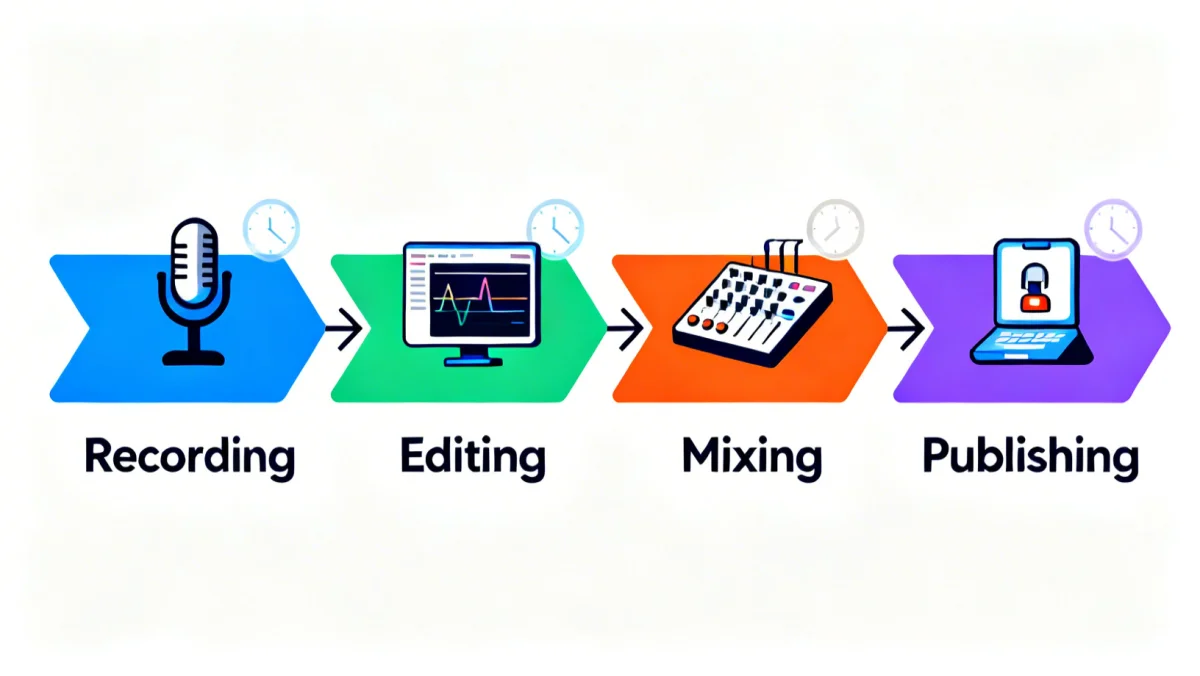
Optimizing Audio Editing and Post-Production
Audio editing and post-production are often the most time-consuming phases of podcast creation. This is where many podcasters spend countless hours meticulously refining tracks, removing errors, and ensuring a polished final product. However, with the right techniques and tools, this stage can be significantly optimized, leading to substantial time savings.
The key to efficient editing lies in minimizing the need for extensive post-production in the first place. This means focusing on capturing high-quality audio during recording and having a clear vision for the final sound. A ‘fix it in post’ mentality is a time-killer; a ‘get it right at the source’ approach is a time-saver.
Techniques for Faster Editing
Implementing specific strategies can drastically cut down editing time:
- Batch Processing: Apply consistent effects (EQ, compression) to multiple tracks or entire episodes using presets.
- Macro Commands: Utilize keyboard shortcuts and custom macros in your editing software for frequently performed actions.
- Dynamic Noise Reduction: Invest in software that can automatically identify and reduce background noise without manual intervention.
- Template Usage: Create episode templates in your DAW with pre-set tracks, intros, outros, and effects chains.
Beyond these technical adjustments, developing a disciplined editing style is crucial. Avoid over-editing; sometimes, a natural pause or a slight imperfection adds authenticity. The goal is clarity and listenability, not absolute perfection. By combining smart tools with disciplined practices, the post-production phase can become surprisingly efficient.
Streamlining Content Creation and Pre-Production
The foundation of an efficient podcast lies in its content creation and pre-production. A well-planned episode requires less revision and editing, directly translating into significant time savings down the line. This stage involves everything from topic ideation and research to scripting and guest coordination. Investing time here pays dividends later.
Many podcasters rush through pre-production, eager to get to the recording phase. However, this often leads to disorganized interviews, off-topic discussions, and a lack of coherent structure, all of which require extensive post-production to rectify. A structured approach to pre-production ensures a smoother, more focused recording session.
Pre-Production Best Practices
Adopt these practices to optimize your pre-production:
- Detailed Outlines: Create a clear outline for each episode, including key talking points, questions for guests, and segment transitions.
- Thorough Research: Ensure all facts are checked and guests are adequately briefed on the episode’s topic.
- Guest Briefings: Provide guests with clear expectations regarding recording quality, time commitments, and discussion points well in advance.
- Content Repurposing Strategy: Plan how you’ll repurpose episode content (e.g., blog posts, social media snippets) during pre-production to avoid extra work later.
By streamlining your content creation and pre-production, you’re not just saving time; you’re also enhancing the quality and coherence of your episodes. This proactive approach minimizes the need for reactive fixes in post-production, making the entire workflow more efficient and enjoyable.
The Financial Impact of Workflow Optimization
Saving two hours per podcast episode isn’t just about reclaiming personal time; it has a tangible and significant financial impact. For many podcasters, time is literally money, whether it’s billable hours lost, opportunity costs, or the potential for increased output leading to greater revenue. Understanding this financial dimension provides a powerful incentive for optimizing workflows.
Consider a podcaster producing weekly episodes. Saving two hours per episode translates to 104 hours saved annually. If your time is valued at even a modest rate, say $50 per hour, that’s an annual saving of $5,200. This calculation doesn’t even account for the potential to produce more content, attract more sponsors, or simply avoid burnout, which has its own indirect financial costs.
Calculating Your ROI on Efficiency
To fully grasp the financial benefits, consider these factors:
- Reduced Labor Costs: If you pay for editing or other services, faster production means lower invoices. If you do it yourself, it frees up time for higher-value activities.
- Increased Content Output: More efficient workflows allow you to produce more episodes, launch new shows, or create supplementary content, potentially increasing audience reach and ad revenue.
- Improved Mental Health: Less stress and burnout lead to sustainable creativity, preventing costly pauses in production.
- Faster Market Response: The ability to produce timely content quickly can capitalize on trending topics, boosting listenership and engagement.
Investing in automation tools or outsourcing specific tasks, while an upfront cost, must be viewed through the lens of return on investment (ROI). Often, the cost of a transcription service or a project management tool is quickly recouped by the hours saved. By 2026, those two hours per episode will not just be a luxury; they will be a competitive necessity, directly contributing to the financial health and growth of your podcasting venture.
| Key Strategy | Brief Description |
|---|---|
| Standard Operating Procedures | Documenting each step of production ensures consistency and reduces decision-making time. |
| Automation Tools | Utilizing AI transcription, smart editing, and scheduling software to minimize manual tasks. |
| Pre-Production Optimization | Thorough planning, detailed outlines, and clear guest briefings reduce post-production work. |
| Financial Impact | Saving hours translates directly to reduced labor costs, increased output, and improved ROI. |
Frequently Asked Questions About Podcast Workflow Optimization
The most effective first step is to conduct a thorough audit of your current workflow. Identify every task, note the time it takes, and pinpoint recurring bottlenecks. This granular understanding will reveal the areas where optimization efforts will yield the greatest impact, allowing for targeted improvements rather than broad, less effective changes.
AI transcription services like Descript or Otter.ai can save several hours per episode, especially for longer podcasts. Manual transcription is incredibly time-consuming. These services provide a rough transcript in minutes, which you can then quickly edit for accuracy, drastically reducing the effort involved in creating show notes, captions, and blog posts.
For serious podcasters, premium editing software is often a worthwhile investment. Advanced features like spectral editing, intelligent noise reduction, and customizable templates can significantly streamline post-production. The time saved, improved audio quality, and professional results often justify the subscription or one-time fee, providing a strong return on investment over time.
Consistent audio quality starts with a standardized recording setup. Use the same microphone, record in a treated acoustic environment, and apply consistent settings for gain and processing. For remote guests, provide clear guidelines and consider using tools like Riverside.fm or Zencastr for high-quality separate track recordings, which simplifies post-production.
Delegation is crucial for maximizing time savings. Tasks such as transcription, initial audio editing, show notes writing, or social media promotion can be outsourced to freelancers or virtual assistants. This frees up the podcaster to focus on content creation, guest relations, and strategic growth, which are often the highest-value activities for the show.
Conclusion
The journey to saving two hours per podcast episode by 2026 is an ambitious yet entirely attainable goal for any podcaster committed to efficiency and growth. By systematically analyzing current workflows, strategically adopting automation tools, optimizing both pre- and post-production, and recognizing the significant financial implications, creators can transform their production process. This not only leads to a more sustainable and less stressful creative endeavor but also positions your podcast for greater success and impact in an increasingly competitive digital audio landscape. Embrace these changes, and watch your podcasting efforts become more productive and profitable than ever before.