Secure Your Smart Home: 4 Steps Against Cyber Threats
Anúncios
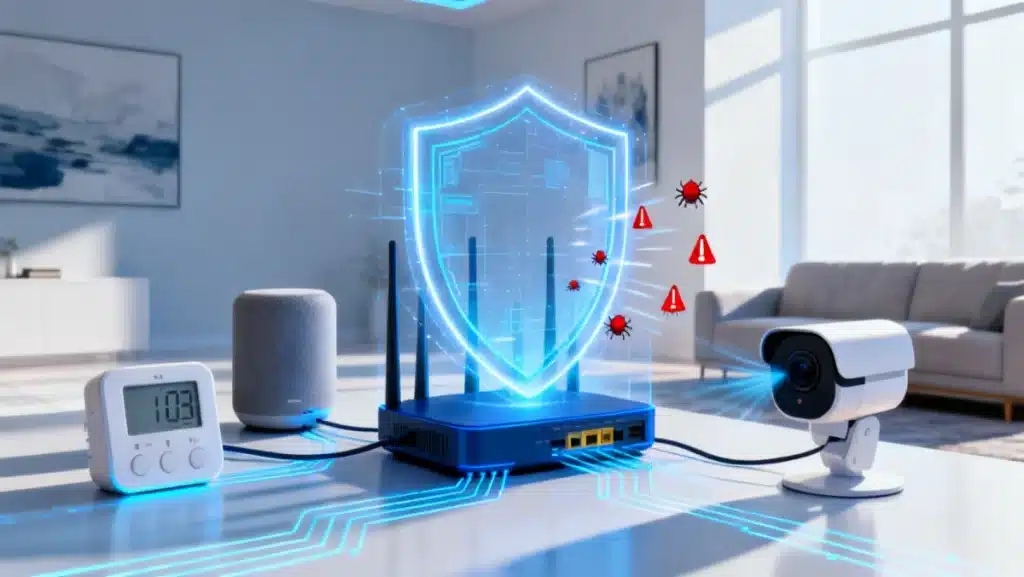
Securing your smart home network is crucial in today’s digital landscape, involving robust password practices, regular software updates, network segmentation, and strong router security to prevent cyber threats.
As our homes become increasingly connected, the convenience of smart devices brings an undeniable vulnerability. Securing Your Smart Home Network: 4 Essential Steps to Prevent Cyber Threats in the Current Digital Landscape (PRACTICAL SOLUTIONS) is no longer a luxury but a fundamental necessity for every modern household. Are you truly protected?
Anúncios
Understanding the Smart Home Threat Landscape
The proliferation of smart devices, from thermostats to security cameras, has transformed our living spaces into interconnected ecosystems. While offering unparalleled convenience, this interconnectedness also opens doors to potential cyber threats. Understanding the nature of these threats is the first step towards building a resilient defense for your digital sanctuary.
Cybercriminals are constantly evolving their tactics, targeting vulnerabilities in smart home devices and networks. These attacks can range from unauthorized access to personal data to taking control of your devices, disrupting your daily life, and even compromising your physical safety. The sheer volume of data generated and transmitted by smart homes makes them attractive targets.
Anúncios
Common smart home vulnerabilities
- Weak default passwords that are rarely changed.
- Outdated firmware lacking the latest security patches.
- Insecure communication protocols between devices.
- Lack of proper network segmentation, exposing critical devices.
Recognizing these weak points is paramount. Many smart devices are designed with ease of use in mind, sometimes at the expense of robust security. This often leaves consumers unknowingly exposed to risks that can have significant consequences. Education and proactive measures are key to mitigating these dangers effectively.
Step 1: Fortify Your Network with Strong Passwords and Multi-Factor Authentication
The foundation of any strong cybersecurity strategy begins with robust authentication. Your smart home network is only as secure as its weakest password. Many users overlook the importance of changing default credentials, leaving an open invitation for malicious actors to infiltrate their systems. This step is perhaps the most straightforward yet most frequently neglected aspect of smart home security.
Beyond simply changing default passwords, adopting a strategy for creating and managing strong, unique passwords for every device and your Wi-Fi network is critical. A strong password combines a mix of uppercase and lowercase letters, numbers, and symbols, and is at least 12 characters long. Avoid using easily guessable information like birthdays or common phrases.
Implementing multi-factor authentication (MFA)
Multi-factor authentication adds an extra layer of security by requiring two or more verification methods to gain access. This could be something you know (your password), something you have (a code from your phone), or something you are (a fingerprint scan). Even if a cybercriminal manages to obtain your password, MFA prevents them from accessing your accounts without the second factor.
- Enable MFA on all smart home devices and services that support it.
- Use a reputable password manager to generate and store complex passwords securely.
- Periodically review and update all your passwords, especially for critical devices.
Prioritizing strong, unique passwords and enabling MFA wherever possible significantly reduces the risk of unauthorized access. This simple yet powerful security measure forms the bedrock upon which all other security protocols are built, making your smart home a much harder target for cyber threats.
Step 2: Keep Software Updated and Devices Patched
Software vulnerabilities are a constant battleground in the digital world. Manufacturers regularly release updates and patches to address newly discovered security flaws. Neglecting these updates leaves your smart devices exposed to known exploits, making them easy targets for cybercriminals. Regular maintenance of your smart home’s software is a non-negotiable aspect of its overall security posture.
Think of software updates as immunization shots for your devices. Each update brings improvements, bug fixes, and, crucially, security patches that close potential backdoors. Many smart devices offer automatic update features, which should always be enabled. For devices that require manual updates, it’s essential to check for new firmware versions regularly, perhaps on a monthly basis.
The importance of firmware updates
Firmware is the operating system embedded in your smart devices. Just like the OS on your computer or smartphone, firmware can have vulnerabilities. Keeping it updated ensures that your devices are running the most secure version available, protecting against the latest threats. This proactive approach minimizes the window of opportunity for attackers to exploit known weaknesses.
- Enable automatic updates for all smart devices and apps whenever possible.
- Regularly check manufacturer websites for manual firmware updates if automatic updates are not available.
- Be cautious of unofficial updates or third-party sources, as these can introduce malware.
A consistent schedule for checking and applying software and firmware updates is vital for maintaining a secure smart home network. This vigilance ensures that your devices are equipped with the latest defenses against evolving cyber threats, safeguarding your privacy and data.
Step 3: Implement Network Segmentation for Enhanced Security
Your home network likely connects a diverse range of devices, from your personal computer to your smart refrigerator. Not all these devices require the same level of network access or security. Network segmentation involves dividing your home network into smaller, isolated sub-networks. This strategy significantly enhances security by containing potential breaches and preventing them from spreading across your entire network.
The concept is simple: if one smart device is compromised, the attacker gains access only to that specific segment, not your entire network. This limits the damage and protects your more sensitive devices, such as computers containing personal and financial information. It’s akin to having multiple locked doors within your home, rather than just one main entrance.
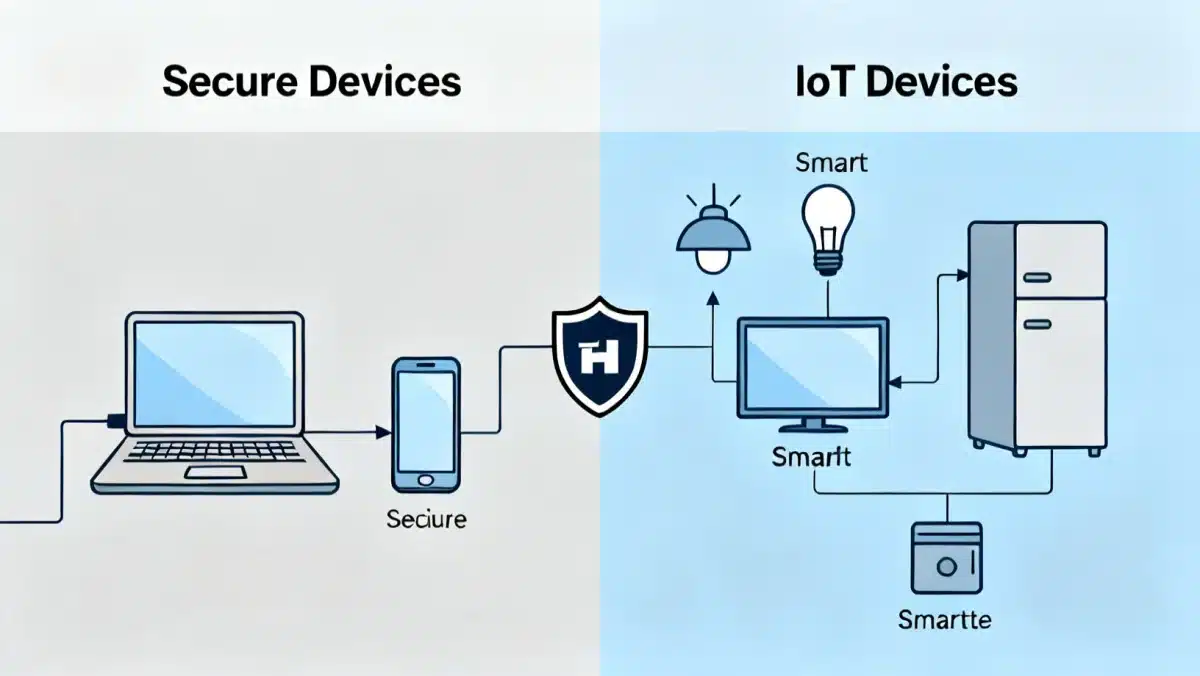
Typically, a common approach is to create a separate guest network or a dedicated IoT network. Most modern routers offer this functionality, allowing you to isolate your smart home devices from your primary network used for work or personal computing. This separation acts as a digital barrier, preventing compromised IoT devices from interacting with more critical systems.
Practical steps for network segmentation
- Create a separate Wi-Fi network specifically for your smart home devices (IoT network).
- Ensure your main network and IoT network have different, strong passwords.
- Configure your router to prevent traffic between the IoT network and your primary network.
- Regularly monitor network activity for any unusual patterns or unauthorized access attempts.
By segmenting your network, you create a more robust defense against cyber threats. Even if an attacker manages to penetrate one segment, the compartmentalization prevents them from easily moving laterally to other, more sensitive parts of your network, providing an essential layer of protection.
Step 4: Secure Your Router and Monitor Network Activity
Your router is the gateway to your smart home network, making it a primary target for cybercriminals. Securing your router is paramount, as it controls all incoming and outgoing internet traffic. Many users leave their routers with default settings, which often include weak passwords and unoptimized security configurations, making them vulnerable to attack.
The first step is to change the default admin username and password for your router immediately after installation. These default credentials are often publicly known, making them an easy entry point for attackers. Choose a strong, unique password, similar to those you use for your smart devices. Additionally, ensure your router’s firmware is always up to date, just like with your other smart devices.
Advanced router security settings
- Disable Universal Plug and Play (UPnP) if not strictly necessary, as it can be a security risk.
- Enable WPA3 encryption for your Wi-Fi network, if supported, or WPA2 at minimum. Avoid WEP.
- Consider enabling a firewall on your router to filter out suspicious traffic.
- Regularly check your router’s connected devices list to identify any unrecognized connections.
Beyond initial setup, continuous monitoring of your network activity is crucial. Many routers provide logs that can reveal unusual patterns or unauthorized access attempts. While this might seem technical, even a basic review can help identify potential issues early on. Tools exist that can help visualize network traffic and alert you to suspicious activities, providing an extra layer of awareness.
By diligently securing your router and actively monitoring your network, you establish a formidable front line against cyber threats. These practices ensure that the very entry point to your smart home is well-protected, safeguarding all the devices connected within.
The Importance of Ongoing Vigilance and Education
Securing your smart home network is not a one-time task but an ongoing commitment. The digital threat landscape is constantly evolving, with new vulnerabilities and attack methods emerging regularly. Therefore, continuous vigilance and a commitment to staying informed are essential components of a truly secure smart home. Relying on past security measures without adapting to new challenges is a recipe for potential compromise.
Educating yourself and your household members about basic cybersecurity practices is crucial. Simple habits, such as identifying phishing attempts, understanding the risks of clicking suspicious links, and recognizing the importance of privacy settings, can significantly reduce the overall attack surface of your smart home. A well-informed user base is often the strongest defense against social engineering attacks.
Staying informed about smart home security trends
- Follow reputable cybersecurity news sources and blogs.
- Subscribe to alerts from your smart device manufacturers regarding security updates.
- Participate in online communities focused on smart home security best practices.
Furthermore, regularly auditing your smart home devices and their configurations is a good practice. Periodically review which devices are connected to your network, what permissions they have, and if they are still receiving security support from their manufacturers. Discontinue use of devices that are no longer supported or updated, as they become significant security liabilities.
By embracing a mindset of continuous improvement and education, you can ensure your smart home network remains resilient against the ever-changing array of cyber threats. This proactive approach transforms your smart home from a potential target into a fortified haven, protecting your data and your peace of mind.
| Key Point | Brief Description |
|---|---|
| Strong Passwords & MFA | Use unique, complex passwords and multi-factor authentication for all devices and accounts. |
| Regular Updates | Keep all device firmware and software updated to patch known security vulnerabilities. |
| Network Segmentation | Isolate smart home devices on a separate network to contain potential breaches. |
| Router Security | Secure your router with strong credentials, encryption, and regular monitoring. |
Frequently Asked Questions About Smart Home Security
Smart home network security is crucial because compromised devices can expose personal data, grant unauthorized access to your home, and even facilitate larger cyberattacks. Protecting your network safeguards your privacy, financial information, and physical safety from evolving digital threats.
Failing to update smart device firmware leaves your devices vulnerable to known security exploits. Manufacturers release updates to patch these weaknesses, and without them, your devices become easy targets for hackers, potentially leading to data breaches or device hijacking.
Network segmentation isolates your smart devices on a separate sub-network. If one device is compromised, the breach is contained to that segment, preventing attackers from accessing your main network where sensitive data like personal computers and financial information reside, limiting overall damage.
While WPA2 is still widely used, WPA3 offers stronger encryption and enhanced protection against brute-force attacks and offline dictionary attacks. Upgrading to WPA3, if your router supports it, provides a more robust defense for your Wi-Fi network against advanced cyber threats.
If a smart device is no longer supported with security updates, it becomes a significant security risk. It’s highly recommended to replace such devices, as they will not receive patches for new vulnerabilities. Alternatively, consider disconnecting them from your network entirely if their function isn’t critical.
Conclusion
In an increasingly connected world, securing your smart home network is a continuous and essential endeavor. By consistently applying strong password practices, ensuring all software is up to date, segmenting your network, and fortifying your router, you build a robust defense against cyber threats. Proactive vigilance and ongoing education are not merely recommendations but fundamental requirements for maintaining a safe and private smart living environment. Embracing these practical solutions empowers you to enjoy the convenience of smart technology without compromising your digital security.