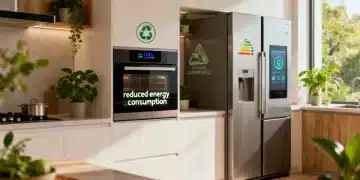
Smart Home Energy Monitoring: Reduce Consumption, Save Hundreds
Anúncios
Smart home energy monitoring systems provide detailed insights into household electricity usage, enabling homeowners to pinpoint wasteful habits and implement targeted strategies across three key consumption areas to achieve substantial annual financial savings.
Are you looking to significantly cut down on your utility bills and make your home more energy-efficient? Implementing smart home energy monitoring is a powerful strategy that can help you identify wasteful consumption patterns and unlock substantial annual savings, often totaling hundreds of dollars.
Anúncios
Understanding the Power of Smart Home Energy Monitoring
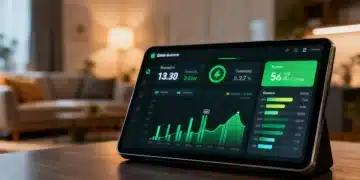
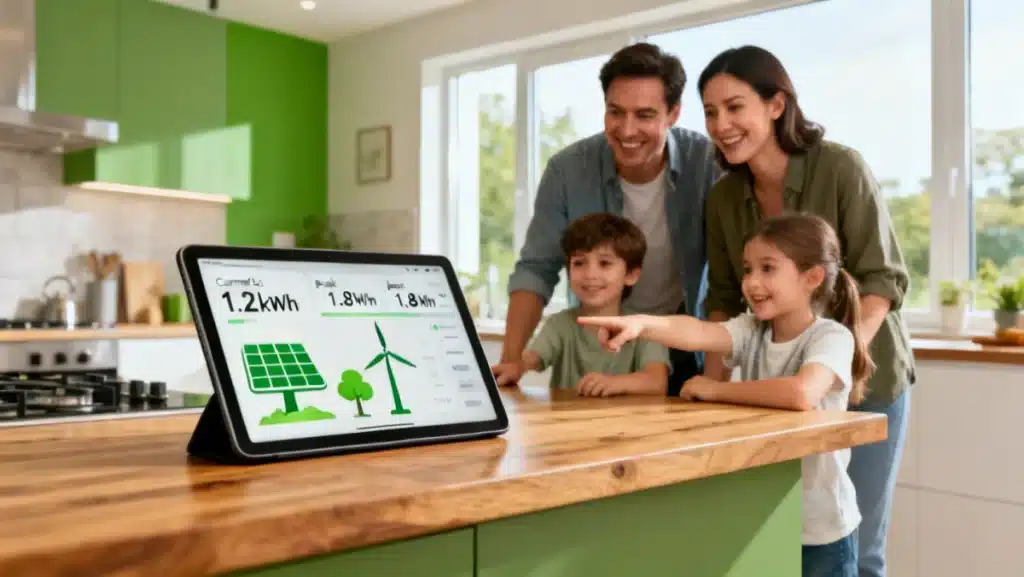
Smart home energy monitoring isn’t just about knowing your total electricity bill at the end of the month; it’s about gaining granular insights into where and how your energy is being used in real-time. These systems provide a comprehensive overview, often breaking down consumption by appliance, circuit, or even time of day, allowing for a proactive approach to energy management.
The core benefit lies in visibility. Before you can reduce something, you must first understand it. Traditional utility bills offer a broad summary, but smart monitors delve into the specifics, revealing hidden energy hogs and inefficient habits that contribute significantly to your overall energy expenditure. This newfound clarity empowers homeowners to make informed decisions about their energy usage.
Anúncios
Real-time Data and Appliance-Level Insights
One of the most compelling features of modern smart energy monitoring systems is their ability to provide real-time data. This means you can see the immediate impact of turning on an appliance or adjusting your thermostat. This instant feedback loop is crucial for behavioral change.
- Instant Feedback: See energy consumption spike as you use high-demand appliances.
- Appliance Identification: Many advanced systems can infer which appliances are drawing power.
- Historical Trends: Track usage over days, weeks, and months to identify patterns and anomalies.
By understanding which devices consume the most energy, homeowners can prioritize their efforts. For instance, if you discover your old refrigerator is running constantly and using excessive power, you might consider replacing it with an Energy Star-rated model, knowing the investment will be recouped through energy savings.
Beyond the Meter: Whole-Home vs. Circuit Monitoring
When considering smart home energy monitoring, it’s important to differentiate between whole-home monitoring and circuit-level monitoring. Whole-home systems typically connect directly to your main electrical panel, providing an aggregate view of your total consumption. While useful, they don’t always pinpoint individual culprits.
Circuit-level monitoring, on the other hand, involves sensors on specific circuits or even individual smart plugs for individual devices. This offers a much more detailed breakdown, allowing you to isolate the energy footprint of your HVAC system, entertainment center, or kitchen appliances. The more detailed the data, the more precise your energy-saving strategies can be.
Ultimately, smart home energy monitoring transforms energy consumption from an opaque monthly bill into a transparent, actionable dataset. This foundation of knowledge is the first essential step toward significant and sustainable energy reduction.
Key Area 1: Tackling Phantom Load and Appliance Efficiency
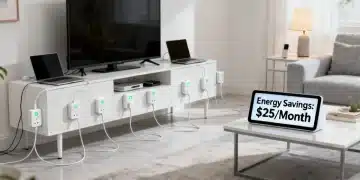
The first major area where smart home energy monitoring can deliver substantial savings is by addressing phantom load, also known as vampire drain, and improving the efficiency of your existing appliances. Many devices continue to draw power even when turned off or in standby mode, silently accumulating costs on your utility bill.
Phantom load can account for 5% to 10% of a household’s electricity consumption, a seemingly small percentage that adds up considerably over a year. Smart energy monitors excel at revealing these insidious power draws, allowing you to take targeted action rather than guessing which devices are the culprits.
Identifying and Eliminating Phantom Load
With a smart energy monitor, you can observe your home’s baseline energy consumption when everything appears to be off. This baseline often represents the collective phantom load of all your plugged-in devices. Once identified, the next step is to pinpoint the biggest offenders.
- Unplug Unused Devices: Simple yet effective for chargers, small kitchen appliances, and entertainment systems.
- Smart Power Strips: Automatically cut power to peripherals when the main device (e.g., TV) is off.
- Smart Plugs: Allow you to remotely switch off individual devices or schedule their power cycles.
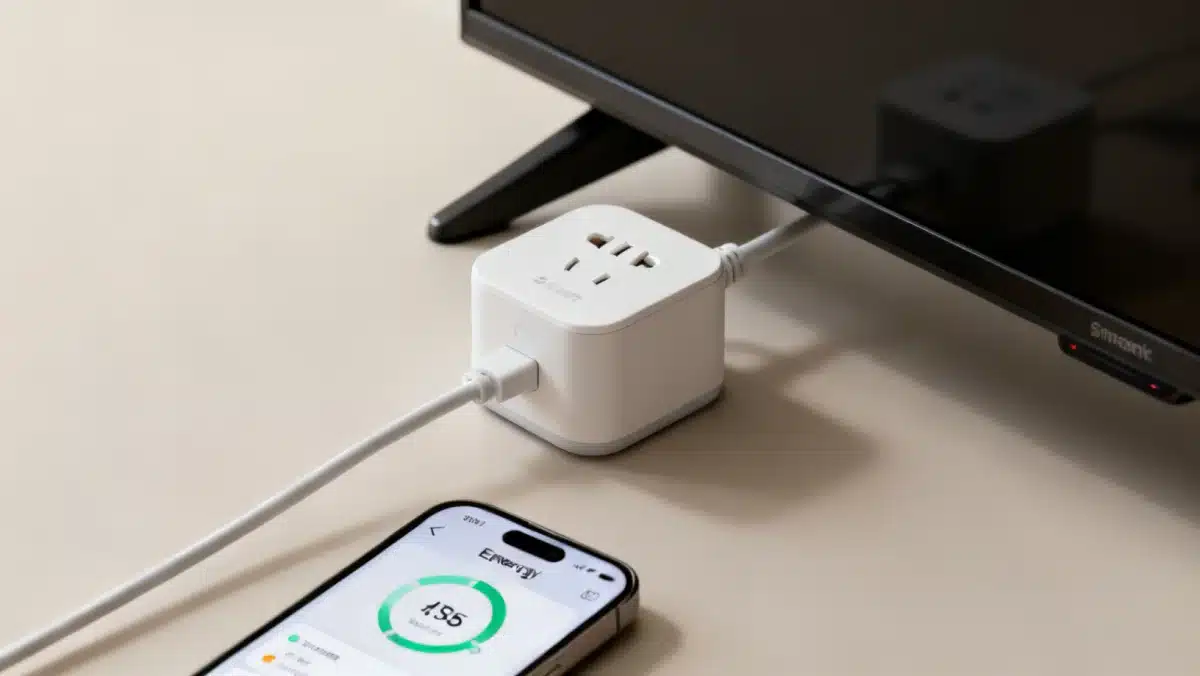
Smart plugs, in particular, are a game-changer. They not only let you remotely control power to any connected device but many also come with built-in energy monitoring, providing device-specific consumption data. This allows you to see exactly how much energy your gaming console, coffee maker, or computer setup is consuming, even when in standby.

Optimizing Appliance Use and Upgrades
Beyond phantom load, smart monitoring helps assess the real-world efficiency of your major appliances. An older refrigerator, washing machine, or dishwasher might be consuming far more energy than you realize, even if it’s not technically ‘broken.’
By tracking the energy usage of these appliances during their operational cycles, you can determine if an upgrade to an Energy Star-certified model would provide a significant return on investment. The initial cost of a new, more efficient appliance can often be offset by years of reduced energy bills, a financial impact made clear by concrete data from your energy monitor.
Ultimately, focusing on phantom load and appliance efficiency, guided by precise data from your smart monitoring system, offers a tangible and often immediate path to reducing your energy consumption and saving money without drastically altering your lifestyle.
Key Area 2: Optimizing HVAC and Climate Control
Heating, ventilation, and air conditioning (HVAC) systems are typically the largest energy consumers in most American homes, often accounting for 40% to 60% of total electricity usage. This makes HVAC and climate control a critically important area for intervention, and smart home energy monitoring provides the tools to make these systems far more efficient.
Without proper monitoring, homeowners often rely on guesswork or simple scheduling, missing significant opportunities for optimization. Smart energy systems, especially when integrated with smart thermostats, offer a detailed understanding of how your climate control impacts your energy bill, allowing for precision adjustments.
Integration with Smart Thermostats and Zoned Heating/Cooling
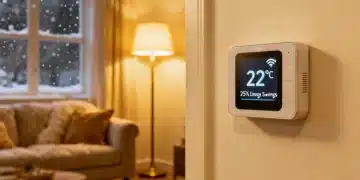
The synergy between smart energy monitors and smart thermostats is powerful. While a smart thermostat can learn your preferences and adjust schedules, an energy monitor shows the actual energy cost of those adjustments. This direct feedback loop is invaluable.
- Behavioral Learning: Smart thermostats adapt to your routines, optimizing comfort and energy.
- Remote Control: Adjust temperatures from anywhere, preventing unnecessary heating or cooling.
- Energy Reporting: Many smart thermostats offer their own energy reports, complementing whole-home monitoring.
For homes with zoned HVAC systems, smart monitoring can highlight discrepancies in energy use between different zones. Perhaps one zone is consistently overheating or overcooling, indicating an insulation issue or a need for more precise thermostat calibration in that specific area. Addressing these imbalances can lead to significant savings.
Identifying Inefficiencies and Maintenance Needs
An unexpected spike in HVAC energy consumption, as revealed by your smart monitor, can be an early indicator of a problem. Perhaps your air filter is clogged, your ducts are leaking, or your system is simply aging and struggling to maintain desired temperatures.
Regular monitoring helps you:
Detect issues early: Catch problems before they become costly breakdowns.
Optimize settings: Fine-tune temperature setpoints and schedules based on actual energy impact.
Evaluate upgrades: Assess the real-world performance of new HVAC units or insulation improvements.
For example, if your energy monitor shows a consistent increase in energy draw from your AC unit during moderate weather, it might signal a refrigerant leak or a compressor issue. Addressing these maintenance needs promptly can prevent further energy waste and extend the lifespan of your system.
By combining smart thermostats with comprehensive energy monitoring, homeowners gain unprecedented control and insight into their HVAC usage, transforming it from a major expense into a manageable and optimized system that contributes significantly to overall energy savings.
Key Area 3: Smart Lighting and Renewable Energy Integration
The third crucial area where smart home energy monitoring can drive significant savings and enhance sustainability is through optimizing lighting and facilitating the integration of renewable energy sources. While individual light bulbs may not consume as much power as an HVAC system, their collective impact, especially in larger homes or those with extensive lighting, can be substantial.
Furthermore, for homeowners considering or already utilizing solar panels or other renewable sources, smart monitoring becomes indispensable for maximizing self-consumption and understanding grid interaction.
Optimizing Lighting with Smart Solutions
Traditional lighting often leads to wasted energy due to lights being left on unnecessarily or inefficient bulb choices. Smart lighting systems, combined with energy monitoring, offer a sophisticated approach to reducing this consumption.
- LED Upgrades: Replace incandescent bulbs with energy-efficient LEDs, which use significantly less power.
- Motion Sensors & Occupancy Detectors: Ensure lights are only on when a room is occupied.
- Dimming & Scheduling: Reduce light intensity when full brightness isn’t needed or schedule lights to turn off automatically.
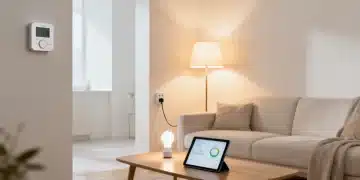
An energy monitor can show the collective energy draw of your lighting circuits. This data can help you prioritize which areas of your home would benefit most from smart lighting upgrades. For instance, if your living room lighting consistently shows high usage, investing in smart dimmable LEDs and motion sensors for that area could yield quick returns.
The ability to control lights remotely or via voice commands also reduces instances of lights being left on accidentally, further contributing to savings. This convenience, coupled with efficiency, makes smart lighting a powerful tool in your energy-saving arsenal.
Maximizing Renewable Energy Self-Consumption
For homes with solar panels, smart energy monitoring is vital. It allows you to track both your home’s energy consumption and your solar production in real-time. This insight is critical for maximizing self-consumption, meaning using the energy your panels produce rather than sending it back to the grid for minimal credit.
By understanding when your solar panels are generating peak power, you can strategically schedule high-energy tasks, such as running the dishwasher, doing laundry, or charging an electric vehicle, to coincide with periods of high production. This reduces your reliance on grid electricity and maximizes the financial benefits of your solar investment.
Monitoring also helps identify potential issues with your solar array, such as reduced output due to shading or equipment malfunction, allowing for timely maintenance. Integrating smart home energy monitoring with renewable sources transforms your home into an active participant in energy management, rather than just a consumer.
Choosing the Right Smart Energy Monitoring System
Selecting the appropriate smart home energy monitoring system is a crucial step toward achieving your energy-saving goals. The market offers a diverse range of solutions, from simple plug-in monitors to whole-home systems that integrate deeply with your electrical panel. Understanding the features and capabilities of different systems will help you make an informed decision tailored to your specific needs and budget.
Consider the level of detail you require. Do you need a broad overview of your entire home’s consumption, or do you want to pinpoint the energy usage of individual appliances and circuits? Your answer will guide you toward either a whole-home solution or a combination of smart plugs and circuit-level sensors.
Key Features to Look For
When evaluating different smart energy monitoring systems, several features stand out as particularly beneficial for maximizing savings and ease of use. Prioritizing these can significantly impact your experience and the effectiveness of the system.
- Real-time Data: Essential for immediate feedback on energy consumption.
- User-Friendly App: An intuitive interface makes it easy to understand and act on data.
- Integration Capabilities: Compatibility with smart thermostats, smart lighting, and other smart home devices.
- Alerts & Notifications: Get notified about unusual energy spikes or consumption patterns.
- Historical Reporting: Analyze trends over time to track progress and identify seasonal variations.
- Installation Ease: Some systems are DIY-friendly, while others require professional installation.
Some advanced systems even offer AI-powered insights, learning your patterns and suggesting personalized recommendations for energy reduction. These intelligent features can uncover savings opportunities you might never have considered on your own.
Professional vs. DIY Installation
The installation process varies significantly between systems. Basic smart plugs are simply plug-and-play. Whole-home energy monitors, however, often require installation within your electrical panel, which can be a complex and potentially hazardous task for those without electrical experience.
If you opt for a system that connects directly to your electrical panel, it’s highly recommended to consult with or hire a qualified electrician. This ensures safety and proper functionality. DIY options are available for those comfortable with basic electrical work, but always prioritize safety first. The cost of professional installation is often a worthwhile investment to ensure the system operates correctly and safely.
By carefully considering your needs, researching available features, and understanding the installation requirements, you can select a smart energy monitoring system that effectively helps you reduce consumption, save hundreds annually, and move towards a more energy-efficient home.
Practical Solutions for Immediate Energy Savings
Once you have your smart home energy monitoring system in place and have identified key areas of high consumption, the next step is to implement practical solutions. These solutions range from simple behavioral changes to strategic upgrades, all aimed at translating insights into tangible financial savings.
The beauty of smart monitoring is that it empowers you to measure the impact of each change, providing concrete evidence of your efforts. This direct feedback can be a powerful motivator for sustaining energy-saving habits over time.
Behavioral Adjustments and Smart Device Utilization
Many significant savings come from simple changes in daily habits, amplified by the use of smart devices. Your energy monitor will highlight areas where these adjustments can have the most impact.
- Mindful Appliance Use: Run dishwashers and washing machines only when full, preferably during off-peak hours if your utility offers time-of-use rates.
- Lighting Habits: Turn off lights when leaving a room, even for short periods. Use natural light whenever possible.
- Thermostat Discipline: Adjust your smart thermostat a few degrees up in summer and down in winter. Every degree makes a difference.
Leverage smart plugs to automate the shutdown of entertainment systems, computer peripherals, and other devices prone to phantom load. Schedule them to turn off completely overnight or when you’re away from home. These small, consistent actions accumulate into significant savings.
Strategic Upgrades and Home Improvements
For more substantial savings, consider strategic upgrades based on the data provided by your energy monitor. If your HVAC system is constantly cycling and drawing excessive power, it might be time for a professional tune-up or even a replacement with a high-efficiency model.
Insulation upgrades, sealing air leaks, and replacing old windows can dramatically reduce the energy required to heat and cool your home. Your energy monitor can help you track the energy consumption before and after these improvements, demonstrating their effectiveness and justifying the investment.
Consider upgrading to Energy Star-certified appliances when your old ones reach the end of their lifespan or if your monitoring reveals they are disproportionately consuming energy. While these upfront costs can be higher, the long-term energy savings often provide a compelling return on investment.
By combining smart monitoring with thoughtful behavioral changes and strategic home improvements, you create a holistic approach to energy management that not only saves hundreds annually but also contributes to a more sustainable and comfortable living environment.
Financial Impact: Saving Hundreds Annually
The ultimate goal of implementing smart home energy monitoring is to achieve tangible financial savings, and the evidence suggests that homeowners can indeed save hundreds of dollars annually by adopting these strategies. The precise amount will vary based on initial consumption, local electricity rates, and the diligence with which energy-saving measures are applied, but the potential is significant.
Consider the cumulative effect of small reductions across multiple areas: reduced phantom load, optimized HVAC, and efficient lighting. Each percentage point saved in different categories adds up to a substantial sum when viewed over a year.
Calculating Your Potential Savings
To estimate potential savings, consider a hypothetical scenario: a household with an average monthly electricity bill of $150. If smart energy monitoring helps reduce consumption by just 15%, that translates to $22.50 saved per month, or $270 annually. Many households, especially those starting with higher consumption or older appliances, can achieve far greater reductions.
The investment in a smart energy monitoring system itself is often recouped within the first year or two through these savings. Furthermore, the increased awareness and control over your energy usage lead to sustainable habits that continue to generate savings year after year.
Long-Term Benefits Beyond the Bill
While financial savings are a primary motivator, the benefits of smart home energy monitoring extend beyond merely reducing your utility bill. There’s a significant environmental impact, as lower electricity consumption often translates to a reduced carbon footprint, contributing to a healthier planet.
- Increased Home Value: Energy-efficient homes are often more attractive to potential buyers.
- Enhanced Comfort: Optimized climate control leads to a more consistently comfortable living space.
- Reduced Maintenance Costs: Early detection of appliance issues can prevent costly repairs.
- Empowerment: Gaining control over a significant household expense brings peace of mind.
Moreover, the data provided by these systems can be invaluable for future planning, whether you’re considering major renovations, investing in solar panels, or simply optimizing your lifestyle. It transforms energy from an abstract concept into a measurable, manageable resource.
In essence, smart home energy monitoring is not just an expense; it’s an investment in a more efficient, cost-effective, and environmentally responsible home. The hundreds saved annually are a direct reflection of the power of information and intelligent action.
| Key Area | Brief Description |
|---|---|
| Phantom Load & Appliance Efficiency | Identify and eliminate energy drawn by devices when off or in standby, and optimize appliance use. |
| HVAC & Climate Control | Optimize heating and cooling systems using smart thermostats and detailed usage data. |
| Smart Lighting & Renewables | Reduce lighting consumption with smart solutions and maximize self-consumption from solar. |
| System Selection & Impact | Choose the right monitoring system to achieve significant annual financial and environmental savings. |
Frequently Asked Questions About Smart Home Energy Monitoring
Smart home energy monitoring is a system that tracks your home’s electricity usage in real-time. It provides detailed data on how much energy is being consumed by various appliances or circuits, helping you identify inefficiencies and areas for potential savings.
By providing granular data, smart monitoring reveals energy hogs like phantom loads or inefficient appliances. This insight enables targeted actions, such as unplugging devices, optimizing HVAC schedules, or upgrading to energy-efficient models, directly leading to bill reductions.
Installation varies by system. Simple smart plugs are easy to set up. Whole-home monitors, which connect to your electrical panel, may require professional installation by a qualified electrician to ensure safety and proper functionality.
Many smart energy monitoring systems are designed to integrate with popular smart home platforms and devices like smart thermostats, lighting, and voice assistants. This integration enhances automation and provides a more cohesive energy management experience.
Beyond immediate financial savings, long-term benefits include a reduced carbon footprint, increased home value due to efficiency, enhanced comfort through optimized climate control, and proactive identification of appliance maintenance needs, preventing costly breakdowns.
Conclusion
Embracing smart home energy monitoring represents a pivotal step towards a more efficient and cost-effective household. By illuminating the previously opaque world of home energy consumption, these systems empower homeowners to identify, understand, and address the three key areas of phantom load, HVAC usage, and lighting/renewable integration. The practical solutions derived from real-time data not only lead to significant annual savings, often totaling hundreds of dollars, but also foster a greater sense of environmental responsibility and long-term home sustainability. Investing in smart energy monitoring is an investment in a smarter, greener, and more financially secure future for your home.