Smart Home Accessibility: Top Devices for Seniors in 2026
Anúncios
Smart home accessibility for seniors in 2026 is revolutionizing independent living by integrating innovative devices that enhance safety, comfort, and communication, offering practical solutions for daily challenges.
Anúncios
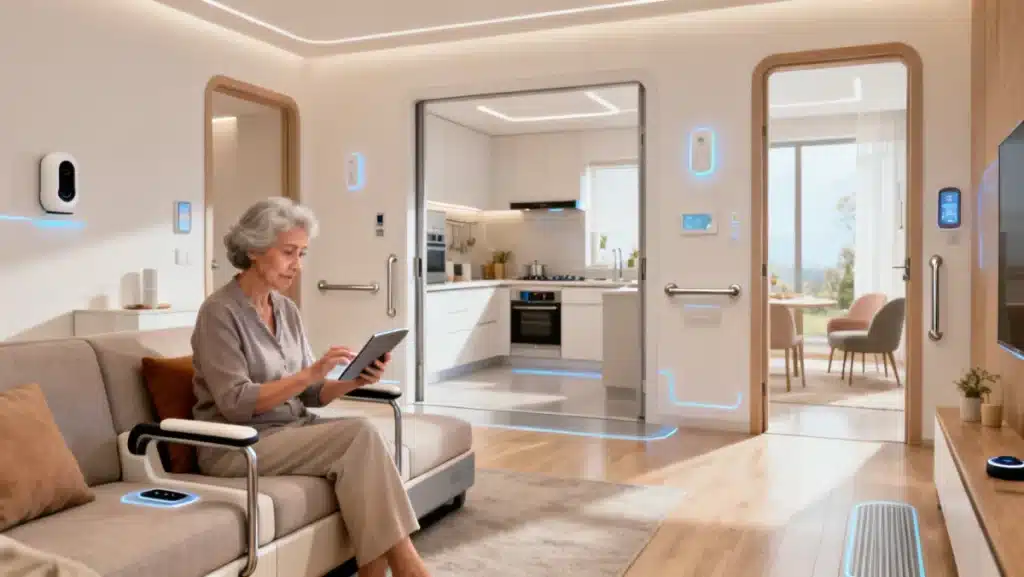
The landscape of senior living is rapidly evolving, with technology playing an increasingly vital role in fostering independence and enhancing quality of life. As we look towards 2026, smart home accessibility for seniors is no longer a futuristic concept but a tangible reality, offering innovative solutions that address common challenges faced by older adults. These advancements empower seniors to age in place comfortably and safely, providing peace of mind for both them and their families.
The evolving need for smart home accessibility
As the global population ages, the demand for solutions that support independent living for seniors continues to grow. Traditional care models are being supplemented, and in some cases, transformed, by technological interventions. Smart home devices offer a proactive approach to managing daily life, mitigating risks associated with aging, and maintaining a sense of autonomy.
Anúncios
The integration of artificial intelligence, machine learning, and advanced sensor technology has led to the development of sophisticated tools that are intuitive and highly effective. These innovations are designed not just for convenience, but as essential aids that can make a significant difference in a senior’s ability to live independently. From managing household tasks to providing critical safety monitoring, smart homes are becoming indispensable.
Addressing common challenges
Aging often brings about various physical and cognitive changes that can impact daily routines. Smart home technology directly addresses many of these challenges, offering practical assistance where it’s needed most.
- Mobility limitations: Devices that automate tasks reduce the need for physical exertion.
- Memory issues: Reminders and automated schedules help keep routines on track.
- Safety concerns: Fall detection, emergency alerts, and secure access systems provide vital protection.
- Social isolation: Communication tools and connected devices foster greater connection.
Understanding these challenges is the first step in appreciating the profound impact smart home accessibility can have. The goal is to create environments that are not only comfortable but also proactively supportive of a senior’s evolving needs, ensuring a higher quality of life.
Smart voice assistants: more than just commands
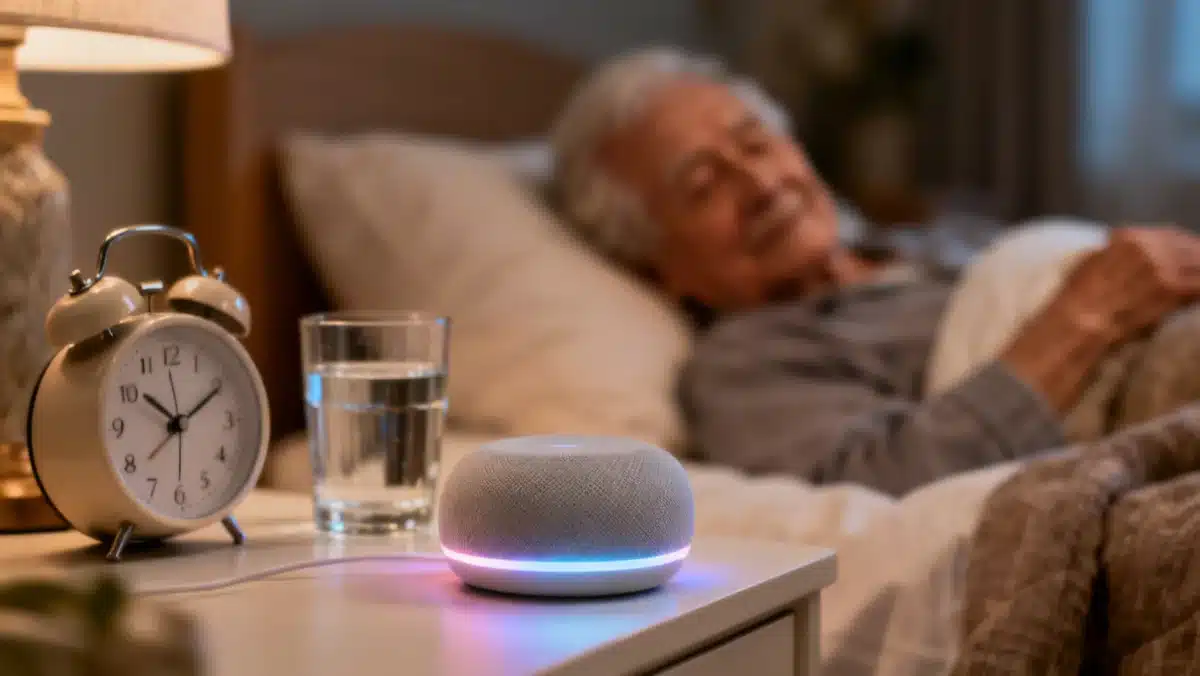
Smart voice assistants have transcended their initial role as simple command-and-response devices, evolving into sophisticated hubs for smart home accessibility. For seniors, these devices, such as Amazon Echo or Google Nest, offer a hands-free interface to control various aspects of their environment, significantly simplifying daily tasks and providing immediate access to information and assistance.
In 2026, these assistants are even more intuitive, capable of understanding nuanced commands and adapting to individual user patterns. They are integrated with a wider array of third-party devices, allowing for a truly comprehensive smart home ecosystem. Their ability to respond to natural language makes them incredibly accessible, even for those who are not tech-savvy.
Enhanced communication and reminders
Beyond controlling lights or thermostats, modern voice assistants are powerful communication tools. They can facilitate hands-free calls to family members or emergency services, reducing the effort and potential frustration of dialing a phone. This feature is particularly valuable for seniors with dexterity issues or in urgent situations.
- Scheduled reminders: Voice assistants can provide timely reminders for medication, appointments, or daily tasks, reducing the risk of missed doses or forgotten engagements.
- Information access: Seniors can instantly ask for weather updates, news headlines, or even engage in cognitive exercises and games, fostering mental engagement.
- Emergency calls: Pre-programmed emergency contacts can be dialed with a simple voice command, offering a quick lifeline.
The continuous improvement in voice recognition accuracy and the expansion of integrated services mean that smart voice assistants are becoming an indispensable part of a senior’s daily routine, providing both practical assistance and a sense of connection.
Smart lighting and environmental controls
Proper lighting and comfortable indoor temperatures are crucial for senior well-being, yet adjusting these can sometimes be challenging due to mobility issues or complex controls. Smart lighting and environmental control systems offer seamless solutions, enhancing safety, comfort, and energy efficiency within the home. These systems are designed to be easily managed, often through voice commands or simple smartphone applications, making them highly accessible for older adults.
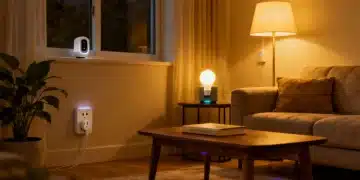
In 2026, smart lighting systems often include adaptive features that automatically adjust brightness and color temperature throughout the day, mimicking natural light cycles to support circadian rhythms. This can improve sleep quality and overall mood. Similarly, smart thermostats learn household preferences and optimize heating and cooling, ensuring a consistently comfortable environment without constant manual adjustments.
Automated safety and convenience
Beyond comfort, these systems contribute significantly to safety. Automated lighting can prevent falls by ensuring well-lit pathways, especially during nighttime trips to the bathroom. Motion-activated lights in hallways or stairwells provide illumination precisely when and where it’s needed.
- Fall prevention: Lights can be programmed to turn on automatically at dusk or when motion is detected, reducing dark areas.
- Energy savings: Smart thermostats and lighting can optimize energy use, leading to lower utility bills.
- Remote management: Family members can monitor and adjust settings remotely, ensuring the senior’s comfort and safety even when they are away.
The ability to control the home environment effortlessly fosters a greater sense of independence and security, allowing seniors to live more comfortably and safely in their own homes.
Advanced fall detection and emergency alert systems
Falls are a leading cause of injury among seniors, often leading to severe health complications and a loss of independence. Advanced fall detection and emergency alert systems are among the most critical smart home accessibility devices, offering rapid response capabilities that can be life-saving. These systems have evolved significantly by 2026, moving beyond simple push-button pendants to incorporate sophisticated sensors and AI-powered analytics.
Modern solutions include wearable devices that automatically detect falls and summon help, as well as ambient sensors placed throughout the home that monitor movement patterns without requiring the senior to wear anything. These ambient systems utilize radar, lidar, or even sound analysis to identify a fall event, distinguishing it from normal activities, thus reducing false alarms.
Immediate assistance and peace of mind
The primary benefit of these systems is the speed at which help can be dispatched. Upon detecting a fall, the system can automatically alert designated family members, caregivers, or emergency services, providing precise location data within the home. This drastically reduces the time between a fall and intervention, which is crucial for minimizing injuries and improving recovery outcomes.
- Automatic alerts: Systems send notifications without manual activation, critical if the senior is unconscious or disoriented.
- Two-way communication: Many systems allow for direct communication with emergency responders through the device, even if the senior cannot reach a phone.
- Discreet monitoring: Ambient sensors offer privacy while ensuring continuous safety monitoring, avoiding the need for intrusive cameras.
These advanced systems provide invaluable peace of mind for both seniors and their families, knowing that help is always just a fall away, significantly boosting confidence in independent living.
Smart locks and security systems
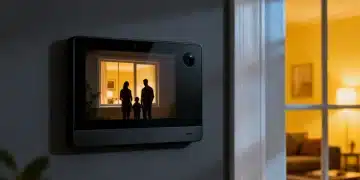
Home security is a paramount concern for everyone, and for seniors, it takes on an added layer of importance. Smart locks and comprehensive security systems offer enhanced protection, convenience, and control over home access, directly contributing to smart home accessibility. By 2026, these systems are more integrated, user-friendly, and intelligent, making them an essential component of a senior-friendly home.
Smart locks allow for keyless entry, eliminating the struggle with small keys and locks, which can be challenging for those with arthritis or limited dexterity. They can be operated via a smartphone app, a keypad, or even voice commands through a smart assistant. Integrated security systems include video doorbells, motion sensors, and indoor/outdoor cameras, all controllable from a central hub or remotely.
Convenience and controlled access
Beyond basic security, these systems offer significant convenience. Family members or caregivers can be granted temporary access codes, or even unlock the door remotely, facilitating visits or assistance without the need for physical keys. This is particularly useful for medical professionals or in emergency situations where quick entry is required.
- Remote access control: Grant or revoke access for visitors, caregivers, or emergency personnel from anywhere.
- Activity logs: Monitor who enters and exits the home, providing an audit trail for added security.
- Video verification: See and speak to visitors at the door before opening it, enhancing safety against unwanted callers.
The combination of robust security and effortless access management empowers seniors to feel more secure in their homes while maintaining a high degree of control over their personal space.
Automated medication dispensers and health monitoring
Managing multiple medications can be a complex and error-prone task for seniors, often leading to missed doses or accidental overdoses. Automated medication dispensers are a cornerstone of smart home accessibility, ensuring that seniors adhere to their prescribed regimens accurately and consistently. By 2026, these devices have become even more sophisticated, integrating with broader health monitoring systems.
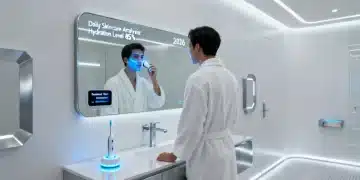
These dispensers automatically sort and dispense pills at scheduled times, often accompanied by audible and visual alerts. If a dose is missed, they can notify family members or caregivers, providing an essential layer of oversight. Furthermore, smart health monitoring devices, such as continuous glucose monitors, blood pressure cuffs, and smart scales, seamlessly record and transmit data to healthcare providers or family, enabling proactive health management.
Proactive health management and support
The integration of medication management with health monitoring creates a holistic approach to senior health. Trends in vital signs can be identified early, allowing for timely medical intervention and preventing potential crises. This proactive approach significantly reduces hospitalizations and improves overall health outcomes.
- Medication adherence: Ensures correct dosage and timing, reducing errors.
- Remote health tracking: Vital health data is automatically shared, enabling continuous oversight by caregivers and medical staff.
- Emergency alerts for anomalies: Systems can flag unusual readings or missed medication, triggering alerts for intervention.
These devices empower seniors to take an active role in their health management while providing a robust support network, fostering greater independence and extending healthy years at home.
Smart kitchen appliances and assistive robotics
The kitchen, often the heart of the home, can also present significant challenges for seniors due to the physical demands of cooking and the risks associated with traditional appliances. Smart kitchen appliances and assistive robotics are transforming this space, making it safer, more efficient, and more accessible for older adults. By 2026, these innovations are becoming more commonplace, offering practical solutions for daily meal preparation.
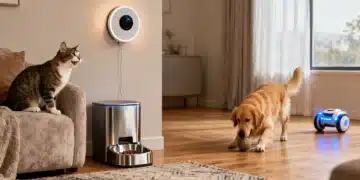
Smart ovens and cooktops feature automatic shut-off functions, remote monitoring, and pre-programmed cooking cycles, reducing the risk of fires or forgotten meals. Smart refrigerators can track inventory and suggest recipes based on available ingredients. Assistive robots, while still evolving, are beginning to appear in homes to help with tasks like retrieving items, light cleaning, or even providing companionship.
Safety, efficiency, and independence in the kitchen
The primary benefit of smart kitchen technology is enhanced safety. Automated features significantly reduce the chances of accidents. Beyond safety, these appliances increase efficiency, allowing seniors to enjoy cooking without excessive physical strain or cognitive load. Assistive robots, though currently limited, promise to further extend a senior’s ability to remain independent in their home.
- Reduced fire risk: Automatic shut-off features on ovens and cooktops.
- Simplified meal prep: Pre-programmed settings and recipe suggestions on smart appliances.
- Assistance with chores: Future robots may help with fetching items or light cleaning, reducing physical burden.
These advancements in the kitchen and through assistive robotics are not just about convenience; they are about preserving a senior’s ability to perform essential daily activities, thereby maintaining their independence and dignity.
| Key Device | Primary Benefit for Seniors |
|---|---|
| Smart Voice Assistants | Hands-free control, communication, and reminders. |
| Fall Detection Systems | Automatic emergency alerts and rapid assistance. |
| Automated Medication Dispensers | Ensures medication adherence and health oversight. |
| Smart Lighting | Prevents falls and enhances comfort with automated illumination. |
Frequently asked questions about smart home accessibility for seniors
Smart home technology significantly enhances safety, independence, and comfort for seniors. It offers practical solutions for daily challenges, such as fall prevention, medication management, and easy control of home environments, reducing the need for constant assistance and providing peace of mind for families.
Many modern smart home devices are designed with user-friendliness in mind, featuring intuitive interfaces, voice control options, and simplified commands. While there may be an initial learning curve, the benefits often outweigh the effort, and family members or caregivers can assist with setup and initial training.
Smart home systems improve safety through features like advanced fall detection, automated emergency alerts, smart locks for secure access, and smart lighting to prevent trips and falls. They also offer remote monitoring capabilities, allowing family members to check in and manage aspects of the home environment from afar.
Absolutely. Automated medication dispensers are a key smart home device that ensures seniors take their medications correctly and on schedule. These devices provide timely reminders and can notify caregivers if a dose is missed, significantly reducing the risk of errors and improving adherence to health regimens.
The cost varies widely depending on the number and type of devices selected, ranging from a few hundred dollars for basic setups to several thousand for comprehensive integrated systems. Many devices offer modular solutions, allowing families to start with essential items and expand as needs evolve or budgets allow.
Conclusion
The integration of smart home technology into senior living environments represents a significant leap forward in promoting independence, safety, and overall well-being. The devices discussed — from intuitive voice assistants to advanced fall detection systems, smart environmental controls, secure locks, automated medication dispensers, and innovative kitchen aids — collectively create a supportive ecosystem. As we move further into 2026, these practical solutions will continue to evolve, offering even more sophisticated and personalized ways to empower seniors to live fulfilling lives in the comfort of their own homes, providing invaluable peace of mind for them and their loved ones.