Podcast Production Budgeting: Save 15% by 2026
Anúncios
Podcast production budgeting is essential for optimizing resources, allowing creators to implement strategic cost-saving measures to achieve a 15% reduction in expenses by 2026 and enhance financial viability.
In the rapidly evolving world of audio content, effective podcast production budgeting is no longer just a good idea; it’s a necessity for sustainability and growth. As the podcasting landscape becomes more competitive, understanding where your money goes and how to optimize those expenditures can be the difference between a thriving show and one that fades into obscurity. This guide will delve into actionable strategies to help you save a significant 15% on your podcast production costs by 2026, ensuring a greater financial impact and a more robust future for your audio endeavors.
Anúncios
understanding your current podcast spending
Before you can cut costs, you must first understand where your money is currently being allocated. Many podcasters, especially independent creators, often overlook the granular details of their expenses, leading to inefficiencies and missed savings opportunities. A thorough audit of your current spending habits provides the foundation for strategic cost reduction.
This initial phase requires meticulous record-keeping and an honest assessment of every dollar spent. It’s not just about the big-ticket items; even small, recurring costs can add up significantly over time. Understanding these patterns is the first step towards smarter financial decisions.
Anúncios
detailed expense tracking
Start by categorizing every expense associated with your podcast. This includes both one-time purchases and recurring subscriptions. A clear breakdown will reveal patterns and potential areas for optimization.
- Equipment costs: Microphones, interfaces, headphones, pop filters, stands.
- Software subscriptions: Editing software, transcription services, project management tools.
- Hosting and distribution: Podcast hosting platforms, CDNs, analytics tools.
- Marketing and promotion: Social media ads, cross-promotion fees, website hosting.
- Guest relations: Interview scheduling software, gift cards for guests.
- Miscellaneous: Sound effects libraries, royalty-free music, administrative fees.
By breaking down your spending into these distinct categories, you gain a panoramic view of your financial outlay. This detailed analysis allows you to pinpoint areas where overspending might be occurring or where more cost-effective alternatives could be explored. The goal is to identify expenditure patterns that can be adjusted without compromising content quality.
Regularly reviewing these expenses, perhaps quarterly or bi-annually, will ensure that your budget remains dynamic and responsive to changes in market prices or your own production needs. This continuous monitoring is a critical component of effective podcast production budgeting.
leveraging free and open-source tools
One of the most immediate ways to reduce podcast production expenses is by embracing free and open-source alternatives for various tasks. While premium tools often offer advanced features, many free options provide robust functionality that is more than sufficient for most podcasters, especially those just starting or operating on a tight budget.
These tools can cover everything from audio recording and editing to graphic design and project management. The key is to evaluate your specific needs and find solutions that meet them without incurring unnecessary costs.
audio editing software alternatives
High-quality audio is paramount for a successful podcast, but professional editing software doesn’t always come with a hefty price tag. There are excellent free options available.
- Audacity: A powerful, open-source audio editor for recording and post-production.
- GarageBand (Mac users): Built-in, intuitive software for recording, editing, and mixing.
- DaVinci Resolve (Fairlight section): A comprehensive video editor with professional audio tools.
Beyond audio, consider free solutions for other aspects of production. For graphic design, Canva offers a free tier that’s perfect for creating cover art and social media visuals. For project management, tools like Trello or Asana have free versions that can help organize your workflow efficiently. Even for transcription, some services offer a limited number of free minutes per month, which can be useful for shorter segments or initial drafts. By strategically incorporating these free resources, you can significantly lower your operational costs, directly impacting your podcast production budgeting in a positive way.
optimizing equipment investment
Equipment is often a significant upfront cost for podcasters. However, smart investment doesn’t always mean buying the most expensive gear. It means selecting equipment that offers the best balance of quality, durability, and affordability for your specific needs. Overspending on high-end equipment that you don’t fully utilize is a common pitfall.
Focus on essential items first, and upgrade only when necessary and when your budget allows. This approach prevents unnecessary expenditures and ensures that your equipment budget is spent wisely.
smart gear choices
Prioritize core equipment that directly impacts audio quality and reliability. Do not be swayed by unnecessary features or brand names if a more affordable option performs just as well.
- Microphones: Start with a good USB microphone (e.g., Blue Yeti, Rode NT-USB) before investing in XLR setups.
- Headphones: Quality closed-back headphones are crucial for monitoring, but studio-grade options can be found affordably.
- Recording environment: Invest in acoustic treatment for your recording space (even DIY solutions like blankets) before buying expensive soundproofing.
Consider buying used equipment from reputable sources. Websites like Reverb.com or local music stores often have well-maintained gear at a fraction of the original price. Additionally, renting specialized equipment for one-off interviews or specific projects can be more cost-effective than purchasing it outright. The key is to be a discerning buyer, understanding that the most expensive option isn’t always the best for your budget or your podcast’s current stage. This mindful approach to hardware acquisition is a cornerstone of effective podcast production budgeting, allowing resources to be allocated where they truly yield the most impact.
streamlining post-production workflows
Post-production, encompassing editing, mixing, and mastering, can be a time-consuming and costly part of podcast creation. Streamlining these workflows can lead to significant savings, both in terms of time and potential outsourcing expenses. Efficiency is key here, and it often involves developing a consistent process and utilizing smart tools.
Reducing the time spent in post-production directly translates to lower costs, especially if you’re paying an editor by the hour or if your own time has a monetary value.
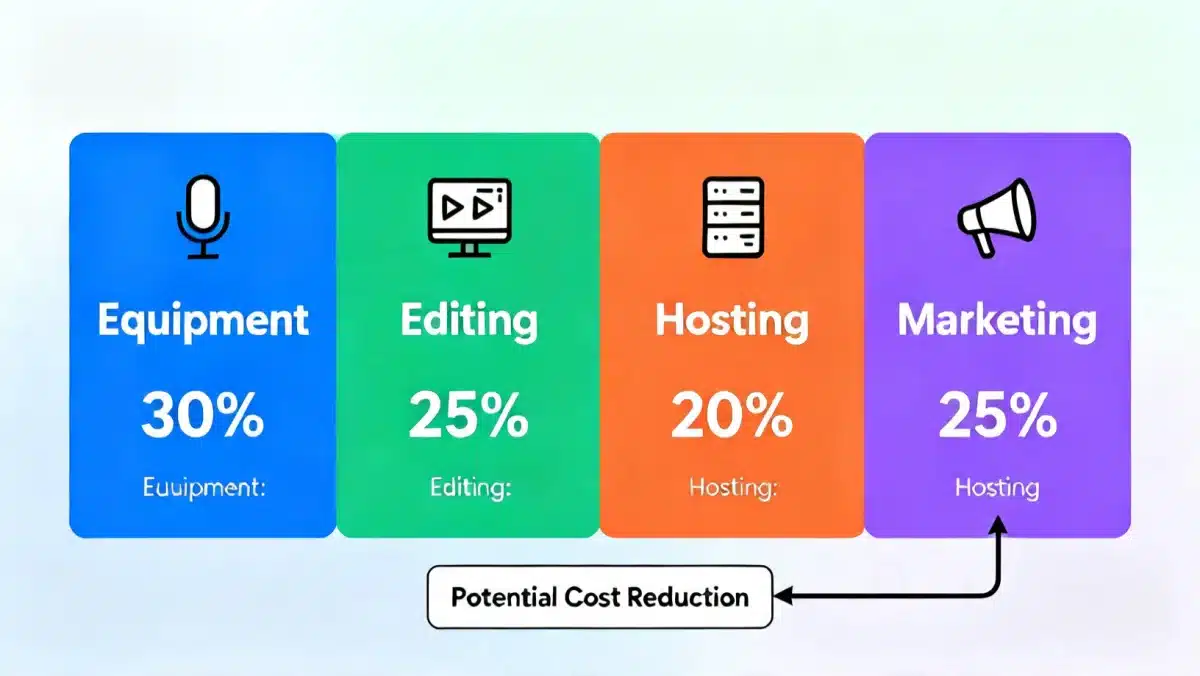
The image above illustrates key areas for cost reduction in podcast production.
automating repetitive tasks
Many post-production tasks are repetitive and can be automated or simplified to save time. This often involves creating templates, presets, and using intelligent software features.
- Editing templates: Set up project templates in your audio editor with pre-configured tracks, effects, and export settings.
- Noise reduction presets: Save and reuse noise reduction settings for common audio issues.
- Batch processing: Use tools that allow for batch processing of audio files for consistent loudness and format.
Furthermore, consider investing in basic audio skills yourself if you currently outsource all editing. Even learning to do initial cuts and clean-ups can drastically reduce the hours an external editor needs, thus cutting down costs. For more advanced mixing and mastering, it might still be beneficial to hire a professional, but having a cleaner source audio will make their job easier and potentially cheaper. Services like Auphonic can automate much of the mastering process for a fraction of the cost of a human audio engineer. By optimizing these workflows, you not only save money but also free up valuable time that can be reinvested in content creation or marketing, enhancing the overall financial efficiency of your podcast production budgeting.
strategic marketing and promotion
Marketing and promotion are crucial for growing your podcast audience, but they can quickly become a money pit if not approached strategically. The goal is to maximize reach and engagement without overspending, focusing on channels and tactics that offer the best return on investment.
Many effective marketing strategies are low-cost or even free, relying more on creativity and consistency than a large budget. Prioritize organic growth and targeted outreach over expensive ad campaigns initially.
free and low-cost promotion tactics
Instead of immediately resorting to paid advertising, explore a variety of free and low-cost promotional methods that can yield significant results.
- Social media engagement: Actively promote episodes on relevant platforms, interact with your audience, and use relevant hashtags.
- Guest appearances/cross-promotion: Appear as a guest on other podcasts or collaborate with similar shows for mutual promotion.
- SEO optimization: Optimize your show notes, episode titles, and website content for search engines to attract organic listeners.
- Email newsletters: Build an email list to directly inform your most engaged listeners about new episodes and content.
Leverage your existing network and community. Encourage listeners to share your podcast, leave reviews, and spread the word. Participate in online forums and communities where your target audience congregates, providing value and gently promoting your show when appropriate. Creating compelling short-form video clips from your audio content for platforms like TikTok or Instagram Reels can also be highly effective and relatively inexpensive. The focus should always be on building genuine connections and providing value, which naturally leads to audience growth. By implementing these strategic marketing approaches, you can significantly reduce your promotional expenditures, making your podcast production budgeting more efficient and impactful, especially as you aim for a 15% cost reduction by 2026.
monetization and revenue generation
While the primary focus of this guide is on cost savings, effective podcast production budgeting also includes strategies for generating revenue. Increasing your income streams can offset production costs, making your podcast more financially sustainable and allowing for future investments. It’s about creating a balanced financial ecosystem where income supports expenditure.
Diversifying your monetization strategies can provide a cushion against fluctuations in any single revenue source, strengthening your podcast’s long-term viability.
diversifying income streams
Explore multiple avenues for monetization, even if they start small. Over time, these can add up to substantial revenue.
- Sponsorships and advertising: Seek out brands that align with your audience and content.
- Listener support: Offer Patreon tiers, Buy Me a Coffee options, or direct donations.
- Premium content: Create exclusive bonus episodes, ad-free versions, or extended interviews for subscribers.
- Merchandise: Design and sell branded merchandise to your dedicated fanbase.
- Affiliate marketing: Promote products or services you genuinely believe in and earn a commission on sales.
Starting with one or two monetization methods and gradually expanding as your audience grows is a pragmatic approach. Don’t feel pressured to implement every strategy at once. Focus on what feels natural for your show and what resonates with your listeners. For instance, if you have a highly engaged niche audience, listener support or premium content might be more effective than broad advertising. Continuously evaluate the effectiveness of each revenue stream and adjust your strategy as needed. By proactively generating income, you not only reduce the net cost of your podcast but also create opportunities for reinvestment, further solidifying your podcast production budgeting and accelerating your goal of saving 15% on costs by 2026.
| Key Strategy | Benefit for Cost Savings |
|---|---|
| Detailed Expense Tracking | Identifies unnecessary spending and areas for optimization. |
| Free/Open-Source Tools | Reduces software subscription costs significantly. |
| Optimized Equipment Investment | Ensures quality gear without overspending on unused features. |
| Streamlined Post-Production | Decreases editing time and potential outsourcing expenses. |
frequently asked questions about podcast budgeting
Hidden costs often include unexpected software renewal fees, royalty payments for music or sound effects, transcription service overages, and overlooked marketing expenses. Regular audits are crucial to uncover these subtle expenditures and integrate them into your overall podcast production budgeting plan effectively.
Focus on essential, high-value items like a good microphone and headphones. Consider reputable used equipment, rent specialized gear for short-term needs, and prioritize acoustic treatment of your recording space. These steps help maintain quality while significantly reducing initial investment in podcast production budgeting.
For beginners, free or low-cost hosting solutions are often sufficient. As your audience grows, premium hosting may offer better analytics, faster delivery, and more storage. Evaluate if the added features justify the cost in your podcast production budgeting, focusing on scalability and audience needs.
Leverage social media engagement, guest appearances on other podcasts, cross-promotion, and strong SEO for your show notes. Encourage listener reviews and shares. Building a community around your podcast can lead to significant organic growth without direct marketing expenditures in your podcast production budgeting.
Generating revenue through sponsorships, listener support, premium content, or merchandise directly offsets production costs. This reduces your net expenditure, effectively contributing to your 15% cost-saving goal by making your podcast production budgeting more self-sufficient and financially robust.
conclusion
Achieving a 15% reduction in podcast production budgeting by 2026 is an ambitious yet entirely attainable goal for any podcaster committed to strategic planning and efficient resource management. By meticulously tracking expenses, embracing cost-effective tools and equipment, streamlining post-production, and implementing smart marketing and monetization strategies, creators can significantly enhance their financial impact. This proactive approach not only safeguards the longevity of your podcast but also frees up resources to invest in content quality and audience growth, ensuring a sustainable and thriving audio presence in the years to come.