Retirement Planning for Millennials and Gen Z: Secure Your Future by 2060

Anúncios
Building a secure retirement by 2060 for Millennials and Gen Z necessitates proactive financial planning, including early contributions to tax-advantaged accounts and strategic investment choices.
Are you a Millennial or Gen Z wondering how to build a comfortable retirement by 2060? The journey to a secure future begins now, and understanding the power of early action in Millennials Gen Z Retirement planning is crucial. This guide will walk you through actionable steps, demystify financial jargon, and empower you to take control of your long-term financial well-being.
Anúncios
The urgency of starting early: why time is your greatest asset
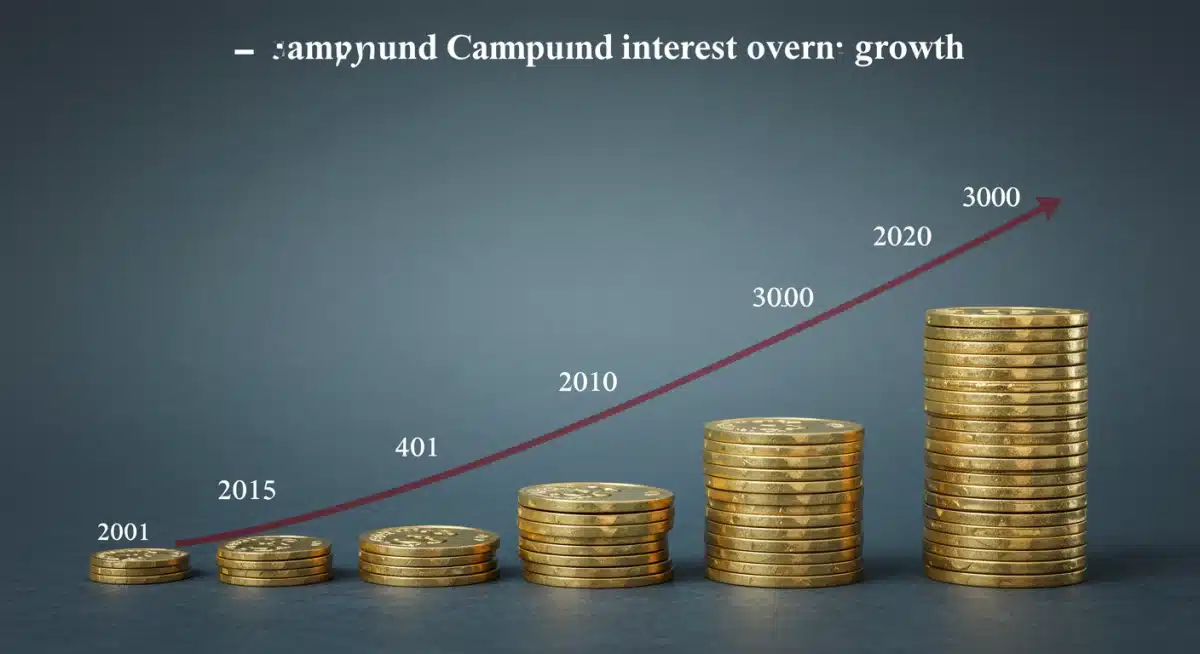
For Millennials and Gen Z, the concept of retirement might seem like a distant dream, decades away. However, delaying retirement planning is a common pitfall that can significantly hinder your financial future. The most powerful tool at your disposal is time, thanks to the magic of compound interest. Starting early, even with small amounts, allows your money to grow exponentially over the long term, making your future self incredibly grateful.
Anúncios
Many young adults face immediate financial pressures, from student loan debt to rising living costs, making the idea of saving for retirement feel overwhelming. Yet, overlooking this vital aspect of financial health can lead to a much harder struggle down the line. Understanding the long-term benefits of early contributions can transform your financial perspective and motivate you to begin today.
Understanding compound interest: your money’s best friend
- The snowball effect: Compound interest means your earnings also earn interest, creating a snowball effect over decades.
- Time is money: The longer your money is invested, the more significant the impact of compounding.
- Early bird advantage: Someone who starts saving at 25 and stops at 35 often has more money at retirement than someone who starts at 35 and saves until 65.
It’s not just about how much you save, but when you start saving. Even modest contributions in your twenties can outperform much larger contributions made later in life. This principle underscores the non-negotiable importance of prioritizing retirement savings now, rather than waiting for a hypothetical “better” time that often never arrives. By harnessing the power of compounding, you are essentially making your money work harder for you, building a substantial nest egg for 2060 and beyond.
Setting realistic retirement goals for a secure 2060
Before you can effectively plan for retirement, you need to define what a secure future by 2060 looks like for you. This involves considering your desired lifestyle, potential healthcare costs, and how inflation might impact your purchasing power decades from now. Setting clear, quantifiable goals provides a roadmap and helps you determine how much you need to save and invest.
Many people find it challenging to envision their life 30-40 years in the future, but breaking it down into smaller, more manageable considerations can help. Think about what kind of home you’d like to live in, what hobbies you’ll pursue, and whether you plan to travel extensively. These details, though seemingly small, contribute to a comprehensive retirement vision.
Estimating your future expenses
- Current spending analysis: Start by analyzing your current spending habits to project future needs.
- Inflation adjustment: Account for inflation, which will significantly increase the cost of living over decades.
- Healthcare considerations: Factor in potential healthcare expenses, which often rise in retirement.
Once you have a clearer picture of your desired retirement lifestyle, you can use online calculators or consult with a financial advisor to estimate the total amount you’ll need. This target number might seem daunting at first, but remember that it’s a long-term goal, achievable through consistent effort and smart financial decisions made over many years. Regular review and adjustment of these goals will also be essential as your life circumstances evolve.
Leveraging employer-sponsored plans: 401(k)s and beyond
One of the easiest and most effective ways for Millennials and Gen Z to kickstart their retirement savings is through employer-sponsored plans like 401(k)s. These plans offer significant tax advantages and often come with employer matching contributions, which is essentially free money for your retirement. Not taking advantage of these benefits is like leaving money on the table.
Many employers offer various retirement plans, each with its own set of rules and benefits. It’s crucial to understand the specifics of your plan, including vesting schedules for matching contributions and investment options. Even if your employer doesn’t offer a 401(k), there are other avenues for saving that we will explore.
Maximizing your 401(k) contributions
- Meet the match: Always contribute at least enough to get the full employer match; it’s a guaranteed return on your investment.
- Increase contributions gradually: Aim to increase your contribution rate by 1% each year, especially when you get a raise.
- Understand your investment options: Familiarize yourself with the fund choices available within your 401(k) and choose investments that align with your risk tolerance and timeline.
Beyond the 401(k), some employers offer 403(b) plans (for non-profits and educational institutions) or other defined contribution plans. Regardless of the specific plan, the core principle remains: contribute consistently, especially to capture any employer match, and ensure your investments are appropriately diversified for your age and goals. These plans provide a structured and often automatic way to save, reducing the temptation to spend money that should be earmarked for your future.
Exploring individual retirement accounts (IRAs): traditional vs. Roth
Even if you have a 401(k) or similar employer plan, individual retirement accounts (IRAs) offer additional flexibility and tax advantages for your retirement savings. The two main types are Traditional IRAs and Roth IRAs, each with distinct benefits that can be particularly appealing to Millennials and Gen Z, depending on their current income and future tax expectations.
Choosing between a Traditional and Roth IRA often comes down to your current income and your outlook on future tax rates. A Roth IRA can be especially powerful for young professionals who expect to be in a higher tax bracket later in their careers, as it allows for tax-free withdrawals in retirement.
Key differences and benefits
- Traditional IRA: Contributions may be tax-deductible now, and taxes are paid upon withdrawal in retirement. Growth is tax-deferred.
- Roth IRA: Contributions are made with after-tax money, but qualified withdrawals in retirement are entirely tax-free. Ideal for those expecting higher future tax brackets.
- Contribution limits: Be aware of annual contribution limits for both types of IRAs, which are set by the IRS and can change.
Many financial advisors recommend a Roth IRA for young adults because their income is typically lower now than it will be in their peak earning years. This means paying taxes on contributions today, when your tax rate is lower, can save you a significant amount in taxes during retirement. Diversifying your retirement savings between pre-tax (401(k), Traditional IRA) and after-tax (Roth IRA) accounts can also provide greater flexibility in managing your tax burden in retirement.
Smart investing strategies for long-term growth
Saving money is just one piece of the puzzle; investing it wisely is how Millennials and Gen Z will truly build wealth for retirement by 2060. For young investors, a long time horizon allows for a more aggressive investment strategy, focusing on growth-oriented assets that have historically outperformed over decades, such as stocks and exchange-traded funds (ETFs).
While the stock market can experience fluctuations, historical data consistently shows that over long periods, it tends to trend upwards. The key is to remain invested and avoid emotional reactions to short-term market volatility. Diversification across different asset classes and industries is also critical to mitigate risk.
Building a diversified investment portfolio
- Stocks and ETFs: Focus on broad market index funds or ETFs for diversified exposure to the stock market.
- Bonds: As you get closer to retirement, gradually increase your allocation to bonds for stability, though they offer lower growth potential.
- Real estate and alternatives: Consider smaller allocations to real estate investment trusts (REITs) or other alternative investments for further diversification, if appropriate.
For those new to investing, robo-advisors can be an excellent starting point. They offer automated, diversified portfolios tailored to your risk tolerance and goals, often with lower fees than traditional financial advisors. As you gain knowledge and experience, you might choose to take a more hands-on approach. The most important aspect is to start investing consistently and resist the urge to time the market, focusing instead on long-term growth.
Overcoming common challenges and staying on track
Retirement planning is a marathon, not a sprint, and there will inevitably be challenges along the way for Millennials and Gen Z. Student loan debt, unexpected expenses, career changes, and economic downturns can all test your resolve. However, having a robust financial plan and a resilient mindset can help you navigate these obstacles and stay committed to your goal of a secure 2060.
It’s important to view these challenges not as roadblocks, but as opportunities to review and adapt your strategy. Flexibility in your financial plan is key. Life happens, and sometimes you may need to temporarily reduce contributions, but the goal should always be to resume and even increase them when circumstances improve.
Strategies for financial resilience
Building an emergency fund is paramount. This fund, typically 3-6 months’ worth of living expenses, acts as a buffer against unforeseen events, preventing you from having to dip into your retirement savings. Automating your savings and investments can also help ensure consistency, removing the temptation to skip contributions.
- Emergency fund: Build a cash reserve to cover unexpected expenses, protecting your investments.
- Automate savings: Set up automatic transfers to your retirement accounts to ensure consistent contributions.
- Review and adjust: Regularly review your financial plan and make adjustments as your life circumstances and goals evolve.
Educating yourself about personal finance is an ongoing process. Stay informed about investment strategies, tax law changes, and economic trends. Consider working with a fee-only financial advisor who can provide objective guidance without commission-based incentives. By proactively addressing potential challenges and continuously learning, Millennials and Gen Z can confidently build a path towards a financially secure retirement by 2060.
| Key Retirement Topic | Brief Description |
|---|---|
| Start Early | Leverage compound interest by beginning contributions in your 20s. |
| Utilize 401(k)s | Maximize employer matching contributions; it’s free money. |
| Consider Roth IRAs | Benefit from tax-free withdrawals in retirement, ideal for young earners. |
| Invest Wisely | Focus on diversified, growth-oriented investments for long-term wealth. |
Frequently Asked Questions About Retirement Planning
Starting early is crucial due to compound interest. Even small, consistent contributions made in your twenties have decades to grow, potentially accumulating significantly more wealth than larger contributions started later in life. Time is your most valuable asset in retirement savings.
A 401(k) is an employer-sponsored retirement plan, often with employer matching contributions, while an IRA (Individual Retirement Account) is set up by an individual. Both offer tax advantages, but 401(k)s typically have higher contribution limits and IRAs offer more investment flexibility.
This is a common dilemma. If your employer offers a 401(k) match, contribute at least enough to get the full match first, as it’s a guaranteed return. After that, compare interest rates; high-interest debt should be prioritized, but don’t completely neglect retirement savings.
For young investors with a long time horizon, growth-oriented investments like diversified stock market index funds or exchange-traded funds (ETFs) are generally recommended. They offer broad market exposure and have historically provided strong returns over several decades, outweighing short-term volatility.
A common guideline is to save at least 10-15% of your income for retirement. However, the ideal amount depends on your specific goals, desired retirement age, and current income. Starting with what you can afford and gradually increasing your contributions is more important than waiting to save a perfect amount.
Conclusion
The journey to a secure retirement by 2060 for Millennials and Gen Z is a marathon that requires foresight, discipline, and consistent action. By understanding the power of compound interest, leveraging employer-sponsored plans, exploring individual retirement accounts, and adopting smart investing strategies, you can build a robust financial foundation. Overcoming challenges with an emergency fund and continuous financial education will empower you to navigate unforeseen obstacles and stay firmly on track towards a comfortable and fulfilling future.