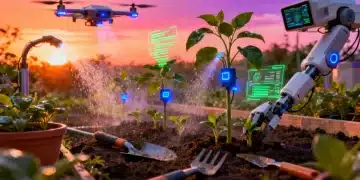
Smart Urban Gardening: 5 Automated Solutions for Spring
Anúncios
Transforming small urban spaces into lush green sanctuaries is now effortlessly achievable with smart gardening solutions that automate plant care, making indoor cultivation accessible and efficient for any city dweller.
Are you an urban dweller dreaming of a thriving indoor garden but constrained by space or time? The advent of smart urban gardening technologies has made cultivating a lush oasis easier than ever, especially as spring approaches and the desire for fresh greenery intensifies. This guide explores five automated solutions designed to simplify plant care, ensuring your indoor garden flourishes with minimal effort.
Anúncios
The Rise of Smart Urban Gardening: Why Now?
Urban living often means limited access to green spaces and the challenges of maintaining traditional gardens. However, the burgeoning field of smart gardening offers innovative solutions that bypass these limitations. With technology, anyone can become a successful gardener, even in the smallest city apartment. This approach is gaining traction due to its convenience, efficiency, and the undeniable joy of growing your own produce or ornamental plants indoors.
The demand for fresh, locally grown food and the desire to reconnect with nature are powerful drivers. Smart gardening systems address these needs by providing automated care, reducing guesswork, and optimizing growing conditions. They are particularly appealing to busy professionals, apartment dwellers, and anyone new to gardening who might be intimidated by the complexities of plant care.
Anúncios
Moreover, smart gardening aligns perfectly with sustainable living principles. By growing plants indoors, you reduce your carbon footprint associated with food transportation and can minimize water waste through precise irrigation. The spring season, with its promise of renewal and growth, is the ideal time to embrace these technologies and embark on your indoor gardening journey.
Automated Watering Systems: The Foundation of Effortless Care
One of the most common challenges for any gardener, especially those with busy schedules, is consistent and appropriate watering. Overwatering or underwatering can quickly lead to plant demise. Automated watering systems are the cornerstone of a truly smart garden, taking this critical task off your plate and ensuring your plants receive exactly what they need, when they need it.
Drip Irrigation and Self-Watering Planters
These systems range from simple self-watering pots to sophisticated drip irrigation networks. Self-watering planters typically have a reservoir at the bottom that wicks water up to the plant’s roots as needed. This passive approach is excellent for individual plants and small setups. For larger indoor gardens, a micro-drip irrigation system can deliver water directly to the base of each plant, minimizing evaporation and waste.
- Reduced Water Waste: Targeted delivery ensures water goes directly to the roots.
- Consistent Moisture: Prevents both drought and waterlogging.
- Time-Saving: Eliminates daily watering chores.
- Nutrient Delivery: Many systems can also integrate liquid fertilizer delivery.
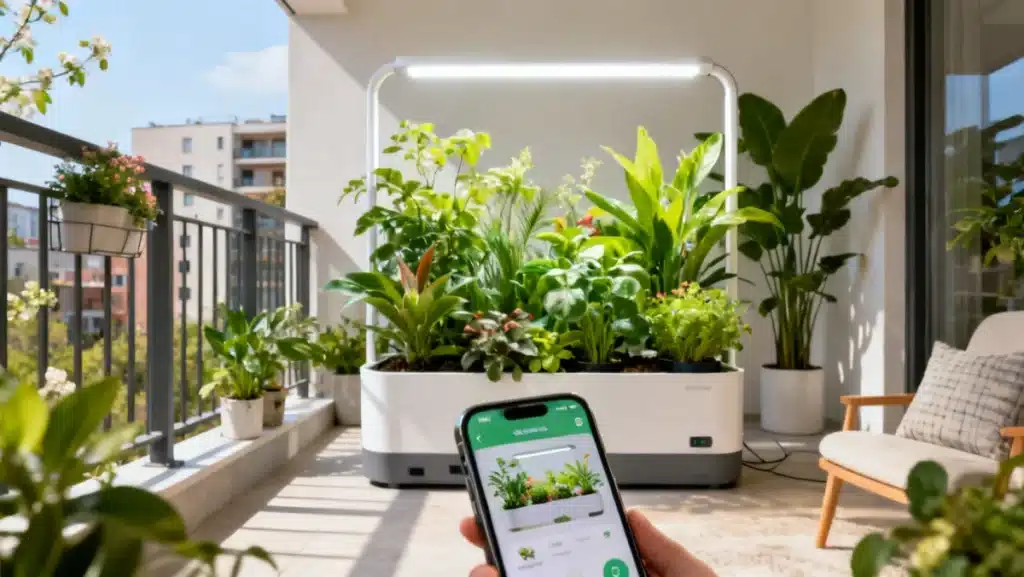
More advanced automated watering systems incorporate sensors that measure soil moisture levels. When the soil dries to a predetermined threshold, the system automatically triggers watering. Some even connect to smartphone apps, allowing you to monitor soil conditions and adjust watering schedules remotely. This level of control provides peace of mind and optimizes plant health.
Choosing the right system depends on the size of your garden and your budget. Simple self-watering pots are an affordable entry point, while app-controlled drip systems offer maximum convenience and precision for the dedicated urban gardener. Regardless of the complexity, automating your watering is the first step towards a truly effortless indoor oasis.
Smart Lighting Solutions: Simulating Nature Indoors
Light is paramount for plant growth, and in urban environments, natural sunlight can be scarce or inconsistent, especially indoors. Smart lighting solutions, primarily LED grow lights, are designed to replicate the sun’s spectrum, providing optimal conditions for photosynthesis regardless of external light availability. These systems are not just about turning lights on and off; they offer precise control over intensity, duration, and even spectral composition.
Full-Spectrum LED Grow Lights with Timers
Modern LED grow lights consume less energy and generate less heat than traditional grow lights, making them ideal for indoor use. Full-spectrum LEDs provide a balanced light similar to the sun, supporting all stages of plant growth from seedling to flowering. Integrating these lights with smart timers allows you to set precise light cycles, mimicking natural day and night rhythms, which is crucial for plant development.
- Optimized Growth: Delivers the specific light spectrum plants need.
- Energy Efficiency: LEDs reduce electricity consumption.
- Programmable Cycles: Ensures consistent light exposure without manual intervention.
- Flexible Placement: Allows gardening in any indoor location, regardless of natural light.
Beyond simple timers, advanced smart lighting systems can be controlled via smartphone apps, allowing you to adjust light intensity and duration remotely. Some even feature pre-programmed settings for different plant types or growth stages, simplifying the process for novice gardeners. Certain high-end systems can even adjust their spectrum based on plant needs, reacting to sensor data from the growing environment. This level of automation ensures your plants always receive the ideal amount and type of light for vigorous growth.
Investing in quality smart lighting is critical for indoor gardening success. It ensures your plants get the energy they need to thrive, preventing leggy growth and promoting robust foliage and blooms. As spring brings longer days, these lights can supplement natural light, extending your growing season and maximizing your indoor harvest.
Automated Nutrient Delivery Systems: Feeding Your Plants Precisely
Just like humans, plants need a balanced diet to grow strong and healthy. In traditional gardening, this involves periodically adding fertilizers, a task that can be messy and imprecise. Automated nutrient delivery systems take the guesswork out of feeding, ensuring your plants receive the right amount of essential minerals at optimal intervals. These systems are particularly prevalent in hydroponic and aeroponic setups, but adaptations exist for soil-based gardens too.
Hydroponic and Aeroponic Systems with Auto-Dosing
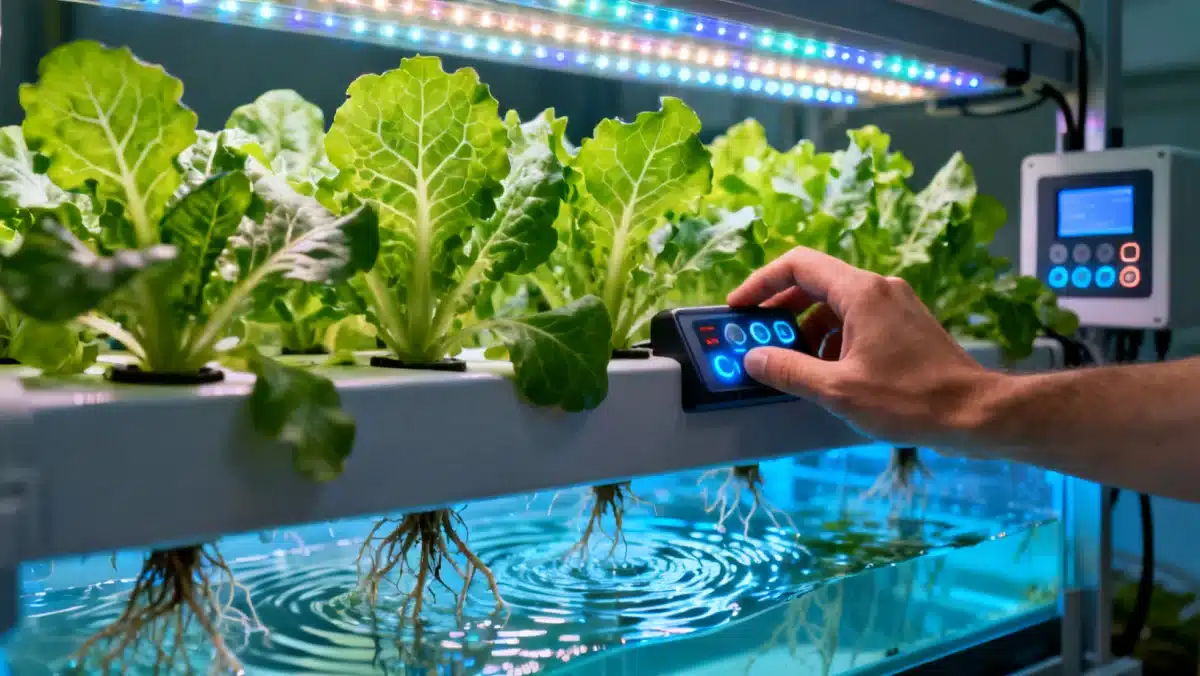
Hydroponics involves growing plants in nutrient-rich water solutions without soil, while aeroponics suspends plant roots in the air and mists them with nutrients. Both methods are highly efficient and ideal for urban spaces. Automated nutrient delivery in these systems uses pumps and timers to circulate nutrient solutions or mist roots at programmed intervals. Some advanced systems feature pH and EC (electrical conductivity) sensors to monitor nutrient levels and automatically adjust dosages, maintaining perfect growing conditions.
For soil-based plants, simpler auto-dosing systems can be integrated into automated watering setups. These often involve a reservoir of diluted liquid fertilizer that is periodically mixed into the irrigation water. This ensures a steady supply of nutrients, preventing deficiencies and promoting continuous growth.
- Optimal Nutrient Uptake: Plants receive nutrients precisely when needed.
- Reduced Waste: Prevents over-fertilization and nutrient runoff.
- Accelerated Growth: Consistent nutrient supply supports faster development.
- Less Manual Work: Eliminates the need for manual fertilization.
The precision offered by automated nutrient delivery is a game-changer for plant health. It prevents nutrient burn from over-fertilization and ensures plants never starve. This is particularly beneficial for fast-growing crops or plants with specific nutritional requirements. By automating feeding, you create a stable and supportive environment that encourages robust growth and higher yields, making your indoor oasis truly productive.
Environmental Control Systems: Mastering the Microclimate
Beyond light, water, and nutrients, environmental factors like temperature, humidity, and air circulation play a crucial role in plant health. Urban indoor environments can be prone to fluctuations, making it challenging to maintain stable conditions. Automated environmental control systems provide the tools to precisely manage these variables, creating an ideal microclimate for your plants.
Smart Sensors and Integrated Climate Control
These systems typically involve a network of sensors that monitor ambient temperature, humidity, and CO2 levels. When conditions deviate from desired parameters, the system can automatically activate devices such as fans for air circulation, humidifiers or dehumidifiers, and even small heaters or coolers. Many systems are integrated with smartphone apps, allowing for remote monitoring and adjustment, and providing alerts if critical thresholds are breached.
Proper air circulation is vital for preventing fungal diseases and strengthening plant stems. Small, oscillating fans can be programmed to turn on periodically. Humidity control is especially important for tropical plants or during the seedling stage, where high humidity is beneficial. Conversely, excessive humidity can foster mold growth, making dehumidifiers important in certain setups.
- Stable Environment: Minimizes fluctuations in temperature and humidity.
- Disease Prevention: Good air circulation reduces the risk of pathogens.
- Optimized Growth Rates: Ideal conditions promote faster, healthier development.
- Remote Monitoring: Keep an eye on your garden’s climate from anywhere.
Integrating these controls transforms your indoor garden into a self-regulating ecosystem. Imagine a system that automatically increases humidity when it drops too low or turns on a fan if the temperature rises above optimal. This level of automation not only saves time but also significantly improves the chances of success, especially for sensitive plants. Mastering the microclimate ensures your plants are always comfortable and thriving, regardless of the conditions outside your window.
Monitoring and Diagnostics: The Brain of Your Smart Garden
While automation handles the physical tasks, smart monitoring and diagnostics systems provide the intelligence, giving you insights into your garden’s health and performance. These systems use sensors and data analysis to track key metrics, allowing for proactive adjustments and preventing potential problems before they escalate. They are the ‘brain’ of your smart urban gardening setup, offering unprecedented control and understanding.
App-Controlled Sensors and AI-Powered Insights
At their core, these systems rely on sensors that measure everything from soil pH and nutrient concentration (EC) to light intensity and ambient temperature. This data is then transmitted to a central hub or directly to your smartphone app. The app often visualizes this data through graphs and charts, making it easy to understand trends and identify anomalies.
- Real-time Data: Instantly know your garden’s vital statistics.
- Early Problem Detection: Identify issues like nutrient deficiencies or pests before they cause significant damage.
- Performance Tracking: Monitor growth rates and environmental responses.
- Personalized Recommendations: Some advanced systems offer tailored advice based on data.
Some cutting-edge systems incorporate artificial intelligence (AI) to analyze data and provide actionable insights. For example, AI might detect a subtle change in leaf color, cross-reference it with nutrient data, and suggest a specific fertilizer adjustment. Or it could identify a pattern in temperature fluctuations and recommend a fan adjustment. This predictive and prescriptive capability elevates smart gardening from automation to true intelligence.
Even simpler monitoring systems, however, are incredibly valuable. Knowing the exact pH of your soil or the light intensity your plants are receiving empowers you to make informed decisions. This proactive approach minimizes crop loss and maximizes yield, making your indoor garden not just automated, but truly smart and responsive to its inhabitants’ needs. As spring beckons, setting up a robust monitoring system will give you the confidence to nurture your plants to their full potential.
Integrating for a Unified Smart Garden Ecosystem
The true power of smart gardening lies in the integration of these individual automated solutions into a cohesive, unified ecosystem. Instead of separate systems for watering, lighting, and nutrients, a fully integrated smart garden allows all components to communicate and respond to each other, creating a dynamic and highly optimized growing environment. This holistic approach maximizes efficiency, conserves resources, and simplifies management for the urban gardener.
Centralized Control Platforms and IoT Connectivity
Many smart gardening products are designed to be part of a larger ecosystem, often leveraging Internet of Things (IoT) technology. A central hub or a single smartphone application can become the control panel for your entire garden. This means you can monitor soil moisture, adjust light schedules, check nutrient levels, and even control environmental factors all from one interface. The interconnectedness allows for sophisticated automation routines, such as: if soil moisture drops, activate the pump; if light intensity is too low, increase LED output; if humidity rises, turn on the fan.
- Seamless Operation: All systems work together harmoniously.
- Enhanced Efficiency: Resources are used optimally based on real-time data.
- Simplified Management: Control your entire garden from a single interface.
- Scalability: Easily add more devices and plants to your integrated system.
The benefits of integration extend beyond convenience. When systems communicate, they can prevent conflicting actions, such as watering when the soil is already saturated due to a previous automated cycle. They also allow for more nuanced environmental responses. For example, a drop in temperature might trigger a humidifier to compensate for drier air, while also slightly increasing light intensity to encourage growth in cooler conditions. This level of intelligent interaction leads to healthier plants and more successful harvests.
As you plan your smart urban gardening setup for spring, consider how different components can work together. Look for brands that offer compatible devices or platforms that support various third-party integrations. Building a unified smart garden ecosystem transforms gardening from a series of individual tasks into a streamlined, intelligent process, allowing you to enjoy the beauty and bounty of your indoor oasis with minimal effort and maximum reward.
| Key Solution | Benefit for Urban Gardeners |
|---|---|
| Automated Watering | Ensures consistent moisture, prevents over/under-watering, saves time. |
| Smart Lighting | Provides optimal light spectrum and cycles, energy-efficient, flexible placement. |
| Automated Nutrient Delivery | Feeds plants precisely, reduces waste, promotes accelerated growth. |
| Environmental Control | Maintains ideal temperature and humidity, prevents disease, remote monitoring. |
Frequently Asked Questions About Smart Urban Gardening
For beginners, self-watering planters combined with a simple LED grow light on a timer are excellent starting points. These systems are affordable, easy to set up, and provide immediate benefits by automating the most critical aspects of plant care without overwhelming complexity.
While there’s an initial investment, smart gardening can save money long-term. Automated watering prevents waste, LED lights are energy-efficient, and growing your own produce significantly cuts down on grocery bills. Reduced plant loss also means fewer replacements, adding to savings.
Many smart gardening systems are designed for ease of use, with modular components and smartphone app integration for simplified setup and control. Maintenance typically involves refilling water reservoirs, adding nutrients, and occasional sensor cleaning, which is much less demanding than traditional gardening.
Leafy greens like lettuce, spinach, and herbs (basil, mint) thrive in smart indoor setups. Small fruiting plants such as cherry tomatoes and strawberries, as well as many ornamental houseplants, also do exceptionally well due to the controlled environment these systems provide.
Smart gardens promote sustainability by drastically reducing water usage through precise irrigation, minimizing reliance on pesticides, and cutting down the carbon footprint associated with food transportation. Growing locally and efficiently also helps reduce food waste and promotes healthier eating habits.
Embrace Your Thriving Indoor Oasis This Spring
As spring breathes new life into the world, it’s the perfect time to cultivate your own vibrant indoor oasis with the help of smart gardening technologies. The five automated solutions discussed—automated watering, smart lighting, automated nutrient delivery, environmental control, and advanced monitoring—collectively transform the complexities of plant care into an effortless and enjoyable experience. Whether you’re a seasoned green thumb or a curious beginner, these innovations empower urban dwellers to grow healthier, happier plants, bringing the tranquility and bounty of nature directly into their homes. Embrace the future of gardening this spring and watch your indoor oasis flourish like never before.