Cybersecurity Threats 2026: 7 Essential Digital Skills for US Citizens
Anúncios
Mastering essential cybersecurity skills is crucial for US citizens in 2026 to effectively counter the latest cybersecurity threats, safeguarding their digital lives and maintaining online resilience.
As the digital landscape rapidly evolves, understanding and mitigating the latest cybersecurity threats: 7 essential digital skills for US citizens in 2026 becomes not just advisable, but absolutely critical. The online world, while offering unparalleled convenience and connection, also harbors sophisticated risks that demand a proactive approach to personal security.
Anúncios
The evolving landscape of cybersecurity threats
The digital realm is a constant battlefield where cybercriminals relentlessly innovate, developing new methods to exploit vulnerabilities. In 2026, these threats are more sophisticated, personalized, and pervasive than ever before. Understanding their nature is the first step towards building robust defenses.
Gone are the days when simple antivirus software offered sufficient protection. Today’s cyberattacks are highly targeted, often leveraging advanced social engineering techniques and artificial intelligence to bypass traditional security measures. This means that individual users, not just large corporations, are increasingly becoming prime targets.
Anúncios
Advanced phishing and social engineering
Phishing attacks continue to be a leading cause of data breaches, but they’ve evolved significantly. In 2026, spear phishing, vishing (voice phishing), and smishing (SMS phishing) are highly tailored, using personal information gleaned from public profiles or previous breaches to create incredibly convincing scams. These attacks often exploit urgency, fear, or greed, tricking users into revealing sensitive data or downloading malicious software.
- Deepfake technology: AI-generated audio and video are making it harder to distinguish legitimate communications from fraudulent ones, especially in vishing attacks.
- Business email compromise (BEC): Attackers impersonate high-ranking executives or trusted partners to trick employees into transferring funds or sensitive information.
- Emotional manipulation: Scammers increasingly use psychological tactics to exploit human emotions, making their requests seem more legitimate and urgent.
The sophistication of these methods means that a simple glance is often not enough to detect a fake. Users need to develop a critical eye and a healthy skepticism towards unsolicited communications, regardless of how official they may appear.
Ransomware and supply chain attacks
Ransomware remains a dominant threat, with attackers encrypting data and demanding payment, often in cryptocurrency. However, in 2026, ransomware groups are increasingly targeting critical infrastructure and supply chains, causing widespread disruption beyond individual data loss. A single breach in a key supplier can cascade, affecting numerous organizations and millions of users.
These attacks are often initiated through vulnerabilities in remote access systems or by exploiting unpatched software. The impact extends beyond financial loss, encompassing reputational damage, operational downtime, and even threats to public safety in the case of critical services.
In conclusion, the threat landscape of 2026 is characterized by its adaptability and complexity. From highly personalized social engineering to disruptive supply chain attacks, cybercriminals are constantly finding new avenues for exploitation. This necessitates a continuous learning approach to cybersecurity for every US citizen.
Skill 1: robust password management and multi-factor authentication
One of the most fundamental yet often overlooked aspects of digital security is strong password management. While it might seem basic, a weak or reused password acts as an open door for cybercriminals. In 2026, the stakes are higher, making sophisticated password practices non-negotiable.
Creating complex, unique passwords for every online account is paramount. This means avoiding easily guessable information like birthdays, pet names, or sequential numbers. Instead, focus on long, random combinations of uppercase and lowercase letters, numbers, and symbols. A password manager can significantly ease this burden by generating and securely storing these complex credentials.
Implementing multi-factor authentication (MFA)
Multi-factor authentication (MFA) adds an essential layer of security beyond just a password. It requires users to verify their identity through two or more distinct methods before granting access to an account. This could involve something you know (password), something you have (a phone or hardware token), or something you are (biometrics).
- Authenticator apps: These generate time-sensitive codes, providing a more secure alternative to SMS-based MFA, which can be vulnerable to SIM-swapping attacks.
- Hardware security keys: Physical devices that plug into a USB port or connect wirelessly, offering the highest level of MFA protection.
- Biometric authentication: Fingerprint or facial recognition, while convenient, should be used with caution and ideally as part of a multi-layered approach.
Even if a hacker manages to obtain your password, MFA ensures they cannot access your account without the second verification factor. This makes it significantly harder for unauthorized individuals to breach your digital defenses. Enabling MFA on all critical accounts, from email to banking, should be a top priority for every US citizen.
Ultimately, a combination of unique, strong passwords and universal MFA implementation forms the bedrock of individual cybersecurity in 2026. These practices are simple to adopt but offer immense protection against a wide array of digital threats.
Skill 2: recognizing and reporting phishing attempts
As cybercriminals refine their social engineering tactics, the ability to identify and respond appropriately to phishing attempts becomes an increasingly vital skill. Phishing emails, texts, and calls are designed to trick you into divulging sensitive information or installing malicious software.
In 2026, sophisticated phishing campaigns often mimic legitimate communications from trusted organizations, making them difficult to spot. They might feature realistic logos, convincing language, and even personalized details to appear authentic. However, certain red flags can help you identify these scams.
Key indicators of a phishing attempt
Developing a keen eye for subtle inconsistencies is crucial. Always scrutinize the sender’s email address – does it exactly match the official domain? Hover over links (without clicking!) to see where they actually lead. Look for grammatical errors, unusual formatting, or a sense of urgency demanding immediate action.
- Suspicious sender address: Check for slight misspellings or unusual domains that don’t match the legitimate organization.
- Generic greetings: Legitimate communications often address you by name, while phishing attempts may use vague greetings like “Dear customer.”
- Urgent or threatening language: Scammers often create a sense of panic to bypass critical thinking, urging immediate action to avoid negative consequences.
- Requests for sensitive information: Legitimate organizations will rarely ask for passwords, credit card numbers, or social security numbers via email or text.
If something feels off, trust your instincts. It’s always better to be cautious than to fall victim to a scam. When in doubt, contact the organization directly using their official contact information, not the information provided in the suspicious message.
Reporting phishing attempts is equally important. Forward suspicious emails to your email provider’s abuse department or to organizations like the Anti-Phishing Working Group (APWG). This helps track and mitigate ongoing campaigns, protecting others from similar attacks. By being vigilant and reporting, you contribute to a safer online environment for everyone.
Skill 3: understanding data privacy and managing digital footprints
In an era of pervasive data collection, understanding your digital footprint and actively managing your privacy settings is a critical skill for US citizens in 2026. Every online interaction, from social media posts to website visits, contributes to a vast amount of personal data being collected, often without explicit awareness.
This collected data is valuable, not just to legitimate businesses for targeted advertising, but also to cybercriminals who can use it for identity theft, social engineering, or other malicious purposes. Taking control of your data starts with recognizing its value and knowing how to protect it.
Managing privacy settings and permissions
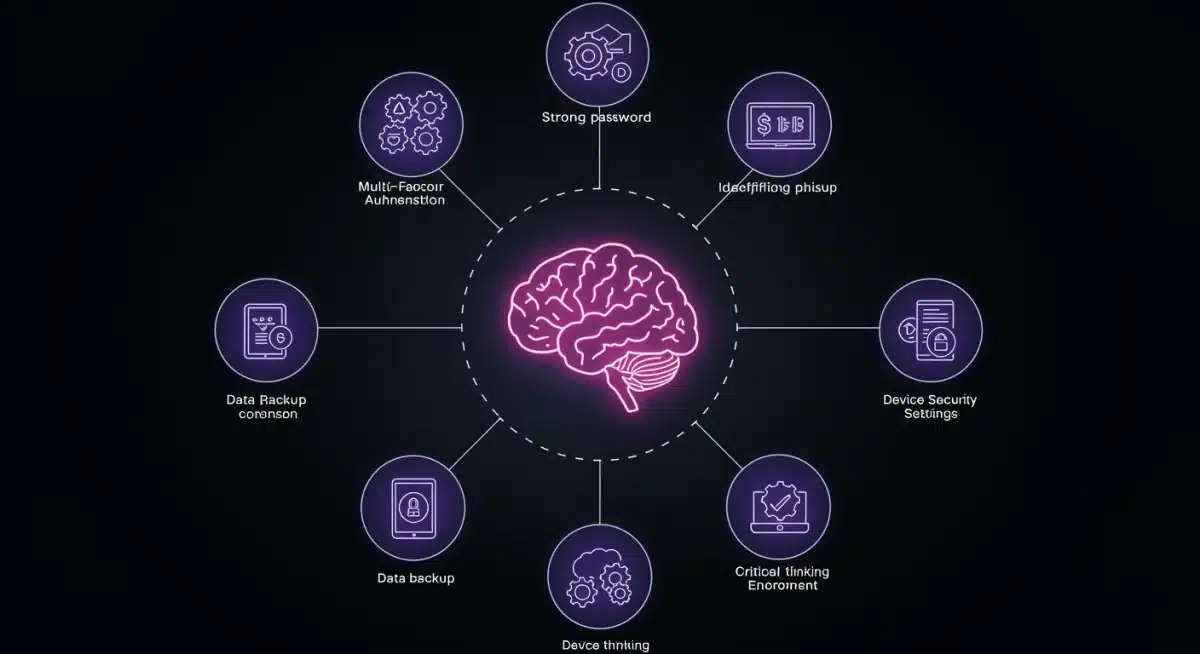
Most online platforms and devices offer extensive privacy settings, but these are often opt-in or hidden deep within menus. Regularly reviewing and adjusting these settings is essential. This includes controlling who can see your posts, what data apps can access, and whether your location is shared.
- App permissions: Be judicious about the permissions you grant to mobile apps. Does a flashlight app truly need access to your contacts or microphone?
- Social media privacy: Understand the difference between public and private profiles, and limit the personal information you share publicly.
- Browser privacy: Utilize browser privacy features, consider ad blockers, and regularly clear cookies and browsing history.
Beyond settings, be mindful of what you share publicly. Even seemingly innocuous details can be pieced together by malicious actors. Think before you post, and assume that anything you put online could potentially become public knowledge.
A proactive approach to data privacy involves not only managing settings but also being selective about the services you use and the information you provide. Regularly auditing your digital footprint and minimizing unnecessary data sharing empowers you to take control of your online identity and reduce your exposure to privacy risks.
Skill 4: secure device and network hygiene
Our personal devices—smartphones, laptops, tablets, and smart home gadgets—are integral to our daily lives, making them prime targets for cyberattacks. Maintaining secure device and network hygiene is essential to prevent unauthorized access and protect your data. This extends beyond just your personal computer to every internet-connected device you own.
Outdated software is a common entry point for cybercriminals. Software vulnerabilities are regularly discovered and patched by developers. Failing to install these updates leaves your devices exposed. Similarly, unsecure Wi-Fi networks can be easily exploited, allowing attackers to intercept your data.
Best practices for device and network security
Regularly updating all operating systems, applications, and firmware is a fundamental defense. Enable automatic updates whenever possible, or make it a routine to check for and install them manually. This ensures you have the latest security patches protecting against known vulnerabilities.
- Strong Wi-Fi passwords: Use complex passwords for your home Wi-Fi network and change the default router login credentials.
- Public Wi-Fi caution: Avoid conducting sensitive transactions (banking, shopping) on public Wi-Fi. If unavoidable, use a Virtual Private Network (VPN).
- Device encryption: Encrypt your devices (laptops, phones) to protect data if they are lost or stolen.
- Regular backups: Routinely back up important data to an external drive or secure cloud service, ensuring you can recover from data loss due to malware or hardware failure.
Furthermore, be cautious about connecting unknown USB drives or other external devices to your computer, as they could contain malware. Disconnect devices from the internet when not in use, especially smart home devices that may have fewer security features. Implementing these practices creates a robust perimeter around your digital life.
Ultimately, a disciplined approach to device and network hygiene, encompassing regular updates, secure network practices, and data backup, forms a critical line of defense against the evolving landscape of cybersecurity threats. It’s about creating a secure ecosystem for all your digital interactions.
Skill 5: understanding and utilizing secure connections (VPNs, HTTPS)
Navigating the internet securely requires an understanding of how data travels and how to ensure its protection in transit. In 2026, with increasing reliance on remote work, public Wi-Fi, and cloud services, the ability to recognize and utilize secure connections like HTTPS and VPNs is more crucial than ever for US citizens.
Unsecured connections leave your data vulnerable to interception by malicious actors, especially on public networks. Without proper encryption, anyone with basic hacking tools can potentially snoop on your browsing activity, steal login credentials, or inject malware into your traffic.
The importance of HTTPS and VPNs
HTTPS (Hypertext Transfer Protocol Secure) is the secure version of HTTP, the protocol over which data is sent between your browser and the website you’re connecting to. The ‘S’ at the end stands for ‘Secure’, indicating that all communication between your browser and the website is encrypted. Always check for the padlock icon in your browser’s address bar.
- Why HTTPS matters: It prevents eavesdropping and tampering with the data exchanged between you and a website, protecting sensitive information like passwords and credit card details.
- VPN basics: A Virtual Private Network (VPN) creates an encrypted tunnel for your internet traffic, masking your IP address and protecting your online anonymity and data from your internet service provider (ISP) and other third parties.
- When to use a VPN: Essential when using public Wi-Fi, traveling, or when you want to bypass geo-restrictions and enhance your overall privacy.
While HTTPS secures individual website connections, a VPN secures your entire internet connection, routing all your traffic through an encrypted server. This makes both technologies complementary and vital for comprehensive online security. Choosing a reputable VPN provider is also crucial, as not all VPNs offer the same level of security or privacy.
By actively looking for HTTPS connections and consistently using a trusted VPN, especially when outside your secure home network, US citizens can significantly reduce their exposure to online surveillance and data interception, ensuring a more private and secure digital experience.
Skill 6: critical thinking and media literacy in the digital age
Beyond technical safeguards, one of the most powerful tools in combating cybersecurity threats in 2026 is the development of strong critical thinking and media literacy skills. The proliferation of misinformation, disinformation, and sophisticated scams means that the ability to evaluate information sources and discern truth from falsehood is paramount.
Cybercriminals often exploit human psychology, leveraging emotional responses or a lack of critical analysis to spread their malicious content. Whether it’s a fake news story designed to spread malware or a convincing scam email, the common denominator is often a failure to critically assess the information presented.
Evaluating sources and identifying misinformation
Developing media literacy involves questioning everything you encounter online. Who created this content? What is their agenda? Is the information supported by credible evidence? Cross-referencing information with multiple reputable sources is a key strategy to verify accuracy.
- Fact-checking resources: Utilize independent fact-checking websites to verify claims and identify known hoaxes.
- Source credibility: Consider the reputation, expertise, and potential biases of the source. Be wary of anonymous sources or those with a clear political agenda.
- Emotional manipulation: Be suspicious of content designed to elicit strong emotional responses, as this is often a tactic to bypass rational thought.
- Deepfakes and manipulated media: Learn to recognize the signs of AI-generated or manipulated images and videos, which are becoming increasingly sophisticated.
This skill extends beyond just news articles; it applies to social media posts, online advertisements, and even unsolicited emails. A healthy dose of skepticism, combined with the tools to verify information, empowers individuals to avoid falling victim to scams and to make informed decisions in the digital world.
Cultivating critical thinking and media literacy acts as a cognitive firewall, protecting you from psychological manipulation and the spread of malicious content. It’s a skill that not only enhances cybersecurity but also fosters a more informed and resilient digital citizenry.
Skill 7: incident response and digital resilience
Even with the most robust defenses, a cyber incident can sometimes occur. The final, yet equally crucial, digital skill for US citizens in 2026 is the ability to respond effectively to a security breach and build digital resilience. Knowing what to do when something goes wrong can significantly mitigate damage and facilitate recovery.
Many individuals panic or make rash decisions immediately after a breach, which can worsen the situation. A calm, methodical approach, coupled with pre-planned steps, is essential for a successful incident response. This includes knowing who to contact, what information to gather, and how to prevent further compromise.
Steps for effective incident response
The moment you suspect a breach, such as unauthorized account activity or identity theft, immediate action is required. This often involves isolating affected devices, changing passwords, and notifying relevant authorities or financial institutions.
- Isolate and disconnect: If a device is compromised, disconnect it from the internet to prevent further spread of malware or data exfiltration.
- Change passwords: Immediately change passwords for all affected accounts, and any other accounts that share the same password. Utilize a password manager for this.
- Notify relevant parties: Inform banks, credit card companies, and other financial institutions if financial data is compromised. Report identity theft to the FTC.
- Backup and recovery: If you have recent backups, prepare for data restoration. If not, assess data loss and develop a recovery plan.
- Learn from the incident: After recovery, analyze how the breach occurred and implement stronger preventative measures to avoid future incidents.
Digital resilience isn’t just about reacting; it’s also about having a recovery plan in place before a breach occurs. This includes regular data backups, knowing your financial institution’s fraud reporting procedures, and understanding how to freeze your credit. Being prepared means you can bounce back faster and stronger from any digital setback.
Developing strong incident response and digital resilience skills empowers US citizens to navigate the inevitable challenges of the digital world with confidence, minimizing the impact of cyber incidents and ensuring a swift return to secure online operations.
| Key Skill | Brief Description |
|---|---|
| Password Management & MFA | Creating unique, strong passwords and enabling multi-factor authentication for all accounts. |
| Phishing Recognition | Identifying and reporting fraudulent communications designed to steal information. |
| Data Privacy Management | Understanding and controlling your digital footprint and privacy settings. |
| Incident Response | Knowing how to react and recover effectively after a cybersecurity breach. |
Frequently asked questions about cybersecurity skills
Cybersecurity skills are crucial in 2026 because digital threats are becoming increasingly sophisticated and pervasive. Protecting personal data, financial information, and online identities requires active participation from individuals to defend against phishing, ransomware, and identity theft.
MFA adds an extra layer of security by requiring two or more verification methods for account access, beyond just a password. This significantly reduces the risk of unauthorized access, even if your password is stolen, making it an essential defense against cybercriminals.
Recognizing deepfakes involves looking for subtle inconsistencies like unnatural facial movements, strange blinking patterns, or distorted audio. Cross-referencing information with trusted sources and being skeptical of emotionally charged content are also vital in identifying manipulated media.
While not always strictly necessary, using a Virtual Private Network (VPN) is highly recommended, especially on public Wi-Fi networks. It encrypts your internet traffic, protects your IP address, and enhances your overall privacy and security against potential data interception.
Immediately after a suspected breach, disconnect affected devices from the internet, change all compromised passwords, and notify your bank or credit card company. Report identity theft to the FTC and consider freezing your credit to prevent further damage.
Conclusion
The digital world of 2026 presents both immense opportunities and significant challenges. By embracing the 7 essential digital skills discussed—from robust password management and phishing recognition to critical thinking and incident response—US citizens can empower themselves to navigate this landscape securely. These skills are not merely technical competencies but fundamental life skills for maintaining privacy, protecting assets, and fostering a resilient digital future for all.