Roth vs. Traditional IRA 2026: Which Retirement Account is Right?
Anúncios
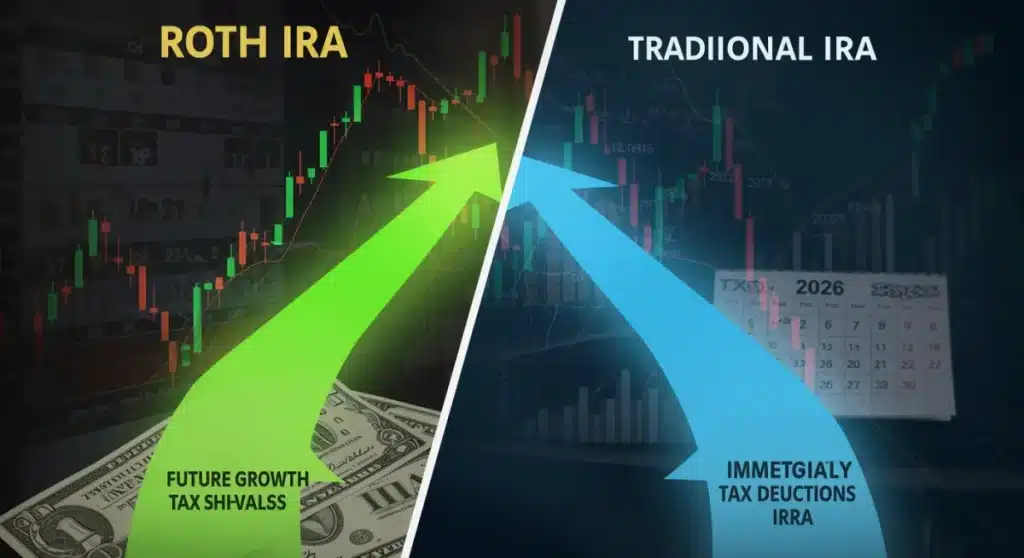
Choosing between a Roth and Traditional IRA for 2026 is crucial for retirement planning, as each offers distinct tax benefits and withdrawal rules that impact your long-term financial growth and flexibility.
Anúncios
When it comes to securing your financial future, understanding the nuances of retirement accounts is paramount. For many young adults in the United States, the decision between a Roth vs Traditional IRA for 2026 can feel overwhelming, yet it is one of the most impactful choices you will make for your long-term wealth accumulation. This guide aims to demystify these options, helping you navigate the complexities and select the retirement vehicle best suited for your unique financial landscape.
Understanding the Basics: Roth IRA Explained
The Roth IRA, named after Senator William Roth, is a popular retirement savings account known for its tax-free withdrawals in retirement. Unlike some other accounts, contributions to a Roth IRA are made with after-tax dollars, meaning you won’t receive an immediate tax deduction. However, this upfront tax payment paves the way for significant tax advantages down the road.
Anúncios
For young professionals or those who anticipate being in a higher tax bracket during retirement, the Roth IRA presents a compelling case. The growth within the account and all qualified withdrawals in retirement are completely tax-free, offering a powerful incentive for long-term savings. This structure can be particularly beneficial if tax rates increase in the future, as your retirement income would be shielded from those higher rates.
Contribution Limits and Income Restrictions for 2026
The IRS sets annual contribution limits for Roth IRAs, which typically adjust for inflation. For 2026, it’s essential to stay updated on these limits to maximize your savings. Additionally, Roth IRAs have income restrictions; if your modified adjusted gross income (MAGI) exceeds certain thresholds, your ability to contribute directly to a Roth IRA may be phased out or eliminated.
- Contribution Limits: Be aware of the maximum amount you can contribute each year, which usually includes an additional catch-up contribution for those aged 50 and over.
- Income Phase-Outs: High-income earners might find their direct Roth IRA contributions limited or disallowed, necessitating alternative strategies like the ‘backdoor Roth IRA’.
- Qualified Withdrawals: To be tax-free, withdrawals must meet certain criteria, primarily being taken after age 59½ and after the account has been open for at least five years.
Understanding these rules is critical to correctly utilizing a Roth IRA. While the tax-free growth and withdrawals are highly attractive, ensuring you meet the income and withdrawal qualifications is key to reaping the full benefits. Many individuals find the Roth IRA a flexible tool, especially given its lenient withdrawal rules for contributions before retirement age, though earnings withdrawals are generally subject to penalties if not qualified.
Understanding the Basics: Traditional IRA Explained
The Traditional IRA has been a cornerstone of retirement planning for decades, offering a different set of tax advantages compared to its Roth counterpart. Contributions to a Traditional IRA are often tax-deductible, meaning you can reduce your taxable income in the year you contribute. This immediate tax break can be particularly appealing for individuals currently in a higher tax bracket.
The money contributed to a Traditional IRA grows tax-deferred, which means you won’t pay taxes on the investment gains until you withdraw the funds in retirement. This deferral allows your investments to compound more effectively over time, as you are not losing a portion of your gains to taxes each year. When you eventually take distributions in retirement, those withdrawals are taxed as ordinary income.
Deductibility and Income Considerations for 2026
The deductibility of Traditional IRA contributions depends on several factors, including whether you or your spouse are covered by a retirement plan at work and your modified adjusted gross income (MAGI). For 2026, these thresholds and rules will continue to be important considerations.
- Tax Deductions: Contributions may be fully or partially deductible, or not deductible at all, depending on your income and workplace retirement plan coverage.
- Tax-Deferred Growth: Your investments grow without being taxed annually, allowing for greater compounding over your working years.
- Required Minimum Distributions (RMDs): Unlike Roth IRAs, Traditional IRAs are subject to RMDs, which generally begin at a certain age (currently 73, though this can change) to ensure taxes are eventually paid on the deferred income.
The Traditional IRA is often favored by those who expect to be in a lower tax bracket during retirement than they are in their working years. The immediate tax deduction can provide significant savings now, and the tax-deferred growth is a powerful benefit. However, the future tax liability on withdrawals and the requirement for RMDs are important aspects to consider when evaluating this option for your retirement strategy.
Tax Implications: Now vs. Later
The fundamental difference between a Roth and Traditional IRA boils down to when you pay your taxes. This distinction is not merely an accounting detail; it’s a strategic decision that can significantly impact your net retirement income. For 2026, understanding these tax implications is crucial for making an informed choice that aligns with your financial projections.
With a Traditional IRA, you enjoy the benefit of tax deductions on your contributions today. This means if you contribute $6,000, and you’re in a 22% tax bracket, you could save $1,320 on your current tax bill. However, when you retire and begin withdrawing funds, every dollar withdrawn will be taxed as ordinary income. Conversely, a Roth IRA requires you to pay taxes on your contributions now. While you don’t get an immediate tax break, all qualified withdrawals in retirement, including all the growth, are completely tax-free.
Anticipating Future Tax Brackets
One of the most critical factors in deciding between these two accounts is your expectation of future tax rates. If you believe you are currently in a lower tax bracket than you will be in retirement, or if you anticipate tax rates will generally increase in the future, a Roth IRA might be the more advantageous choice. Locking in tax-free withdrawals when you expect higher tax rates can be a powerful hedge against future tax liabilities.
- Current Tax Bracket: If you are in a high tax bracket now, a Traditional IRA’s immediate deduction can be very appealing.
- Future Tax Bracket: If you expect to be in a higher tax bracket during retirement, the Roth IRA’s tax-free withdrawals offer long-term savings.
- Tax Law Changes: Future changes in tax legislation could impact the relative benefits of each account, making flexibility and adaptability key.
The decision isn’t just about your current income, but also about your career trajectory and broader economic outlook. A young professional just starting their career, likely in a lower tax bracket, might find a Roth IRA more appealing as their income grows. Conversely, someone nearing retirement with significant income might prefer the immediate tax deduction of a Traditional IRA. Carefully considering your current and projected financial situation is essential for maximizing the tax benefits of your chosen retirement account.
Withdrawal Rules and Flexibility
Beyond tax implications, the rules governing withdrawals from Roth and Traditional IRAs offer distinct levels of flexibility, particularly before and during retirement. Understanding these rules is crucial, as they can significantly impact your access to funds and the tax consequences of early withdrawals. For young adults, the potential need for funds before retirement age makes these differences especially relevant.
Traditional IRAs generally impose a 10% penalty on withdrawals made before age 59½, in addition to being taxed as ordinary income. While there are some exceptions, like for certain medical expenses or first-time home purchases, the primary intent of a Traditional IRA is for long-term, untouched retirement savings. Roth IRAs, on the other hand, offer more flexibility with contributions. You can withdraw your contributions (not earnings) at any time, tax-free and penalty-free, regardless of your age or how long the account has been open. This feature makes Roth IRAs an attractive option for those who might need access to their principal contributions in an emergency.
Accessing Funds Before Retirement
The ability to access funds before traditional retirement age can be a significant differentiator. For a Roth IRA, the five-year rule and age 59½ rule apply to earnings for tax-free and penalty-free withdrawals. However, your original contributions are always accessible without penalty, offering a valuable emergency fund or bridge for significant life events.
- Roth IRA Contribution Withdrawals: Contributions can be withdrawn tax-free and penalty-free at any time, providing a safety net.
- Traditional IRA Early Withdrawals: Generally subject to a 10% penalty and ordinary income tax, with limited exceptions.
- Qualified Withdrawals (Both): After age 59½ and meeting the account’s specific holding period (five years for Roth), withdrawals are considered qualified and can be tax-free (Roth) or taxed as ordinary income (Traditional).
The flexibility of a Roth IRA regarding contribution withdrawals makes it a strong contender for those who value liquidity and potential emergency access to funds without severe penalties. This feature can provide peace of mind, knowing that while you are saving for retirement, a portion of your funds remains accessible if truly needed. Conversely, the more restrictive nature of Traditional IRA withdrawals reinforces its role as a dedicated, long-term retirement vehicle, encouraging savers to keep their funds invested until retirement.
Eligibility and Income Limits for 2026
Both Roth and Traditional IRAs have specific eligibility criteria and income limitations that can influence which account, if any, you can contribute to directly. These rules are subject to change, so understanding the projected 2026 guidelines is essential for effective retirement planning. Missing these details could lead to unintended tax consequences or missed opportunities.
For Traditional IRAs, there are no income limitations for contributing. Anyone with earned income can contribute. However, the ability to deduct those contributions depends on your income level and whether you or your spouse are covered by a retirement plan at work. For Roth IRAs, direct contributions are subject to modified adjusted gross income (MAGI) limits. If your MAGI exceeds certain thresholds, your ability to contribute directly is phased out or eliminated entirely. This often leads higher-income earners to explore alternative strategies like the ‘backdoor Roth IRA’ to bypass these direct contribution limits.
Navigating Phase-Outs and Backdoor Roth IRAs
The income phase-out ranges for Roth IRAs are annually adjusted for inflation. It’s crucial to consult the most current IRS guidelines for 2026 to determine if your income falls within these limits. If you earn too much to contribute directly to a Roth IRA, the ‘backdoor Roth IRA’ strategy can be a viable option. This involves contributing to a non-deductible Traditional IRA and then converting it to a Roth IRA.
- Traditional IRA: No income limit for contributions; deductibility depends on income and workplace plan coverage.
- Roth IRA: Income limits apply for direct contributions, with phase-out ranges that vary annually.
- Backdoor Roth IRA: A strategy for high-income earners to contribute to a Roth IRA by converting a non-deductible Traditional IRA.
Understanding these eligibility and income limits is fundamental to choosing the correct IRA for your situation. For those whose income fluctuates or who anticipate significant raises, planning ahead for potential phase-outs is wise. The ‘backdoor Roth IRA’ strategy, while more complex, offers a pathway for high-income individuals to still benefit from the tax-free growth and withdrawals of a Roth IRA, emphasizing the importance of staying informed and potentially seeking professional financial advice.
The Power of Compounding: How Each IRA Benefits Growth
The magic of long-term investing lies in compounding, where your earnings generate their own earnings. Both Roth and Traditional IRAs leverage this principle to help your wealth grow significantly over time, but the tax treatment of that growth differs, influencing the ultimate value of your retirement nest egg. For young adults, starting early with either account maximizes the power of compounding.
In a Traditional IRA, your contributions and earnings grow tax-deferred. This means you don’t pay taxes on the investment gains year after year. Instead, the full amount of your earnings remains invested, compounding without interruption from taxes until withdrawal. This can lead to a larger account balance over decades. In a Roth IRA, your contributions are after-tax, but once invested, all earnings grow completely tax-free. When you take qualified withdrawals in retirement, not only are your contributions tax-free, but all the accumulated growth is also tax-free, providing a powerful advantage, especially if tax rates are higher in the future.
Illustrative Growth Scenarios
Let’s consider a simplified example. Imagine two individuals, each contributing $6,000 annually for 30 years, with an average 7% annual return. While the Traditional IRA might show a larger nominal balance due to the initial tax deduction and deferred growth, the Roth IRA’s tax-free withdrawals mean that every dollar in the account is truly yours. The Traditional IRA, however, will have a reduced value post-tax.
- Traditional IRA Compounding: Growth is tax-deferred, allowing a larger principal to compound over time, but withdrawals are taxed.
- Roth IRA Compounding: Growth is tax-free, meaning the entire accumulated amount can be withdrawn without tax liability in retirement.
- Net Retirement Income: The Roth IRA often provides a more predictable net retirement income due to its tax-free nature.
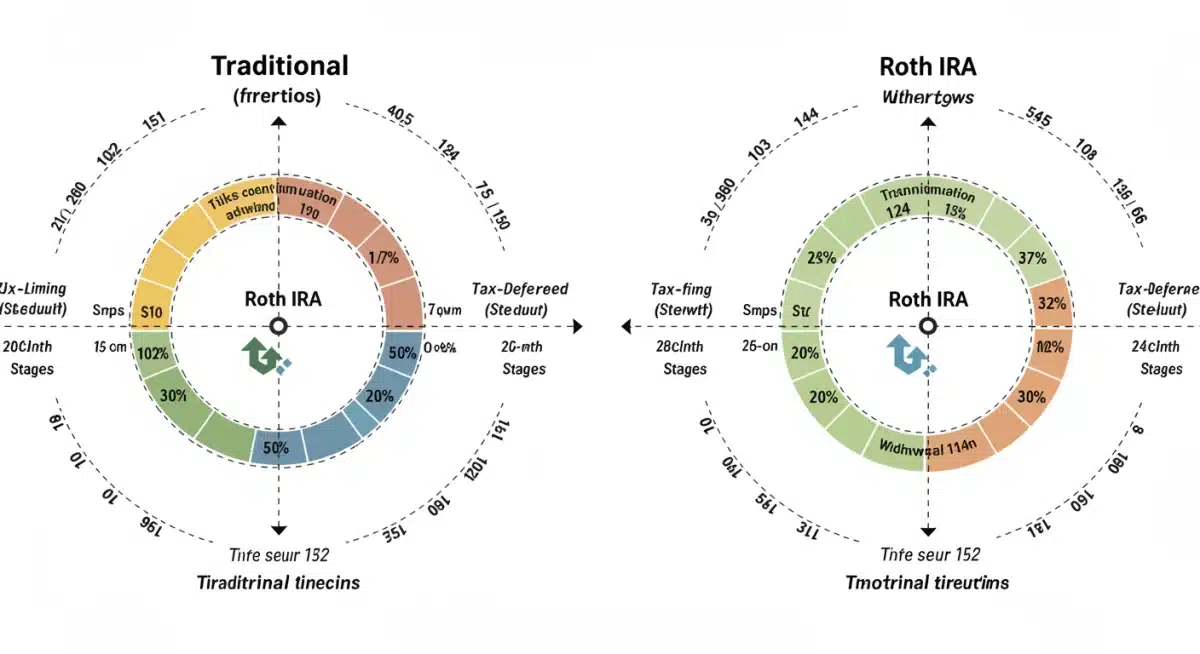
The choice between tax-deferred growth (Traditional) and tax-free growth (Roth) ultimately depends on your tax expectations. If you believe your tax rate will be lower in retirement, the Traditional IRA’s upfront deduction and deferred growth might be more beneficial. If you expect your tax rate to be higher, or if you simply value the certainty of tax-free income in retirement, the Roth IRA offers a compelling advantage through its tax-free compounding. Both accounts offer significant benefits, but understanding their distinct growth mechanisms is key to optimizing your retirement savings strategy.
Making the Right Choice for 2026 and Beyond
Deciding between a Roth and Traditional IRA for 2026 is not a one-size-fits-all decision; it requires a thoughtful evaluation of your current financial situation, future income projections, and tax expectations. There are compelling arguments for both, and the optimal choice often depends on individual circumstances that can evolve throughout your career. It’s about aligning your retirement savings strategy with your personal financial journey.
For young professionals just starting out, a Roth IRA can be particularly attractive. With current incomes likely lower than future earnings, paying taxes now on contributions and enjoying tax-free growth and withdrawals later can be a significant advantage. This also provides flexibility for early withdrawals of contributions if unforeseen needs arise. Conversely, for individuals in their peak earning years, who are currently in a high tax bracket, the immediate tax deduction offered by a Traditional IRA might be more appealing, allowing them to reduce their current tax burden while their investments grow tax-deferred.
Considering a Hybrid Approach
It’s also important to remember that you don’t necessarily have to choose just one. Many individuals find a hybrid approach beneficial, contributing to both a Roth and Traditional IRA, or utilizing a Roth IRA alongside a Traditional 401(k) (or vice versa). This strategy can offer diversification in terms of tax treatment, providing flexibility in retirement when you might need to draw from both tax-free and taxable sources.
- Evaluate Current Income: Are you in a lower or higher tax bracket now?
- Project Future Income: Do you expect your income and tax bracket to increase or decrease in retirement?
- Consider Financial Flexibility: Do you anticipate needing access to contributions before retirement?
- Diversify Tax Treatment: Explore contributing to both account types to hedge against future tax uncertainties.
Ultimately, the best choice for you in 2026 involves a careful assessment of these factors. There’s no single right answer, but rather an optimal strategy tailored to your unique financial goals and circumstances. Regularly reviewing your retirement plan and adjusting your contributions as your life and financial situation change is a smart approach to ensure you’re always on the right track for a secure retirement.
| Key Feature | Description |
|---|---|
| Contribution Tax | Roth: After-tax; Traditional: Pre-tax (deductible). |
| Withdrawal Tax | Roth: Tax-free (qualified); Traditional: Taxed as ordinary income. |
| Income Limits | Roth: Has MAGI limits; Traditional: No income limit for contributions. |
| Early Withdrawals | Roth: Contributions tax/penalty-free; Traditional: Generally taxed/penalized. |
Frequently asked questions about IRAs
Yes, you can hold both Roth and Traditional IRAs at the same time. However, your total contributions across all IRAs for a given year cannot exceed the annual contribution limit set by the IRS. This approach allows for tax diversification in retirement planning.
If your income exceeds the Roth IRA contribution limit, you can explore the ‘backdoor Roth IRA’ strategy. This involves contributing to a non-deductible Traditional IRA and then converting those funds to a Roth IRA, effectively bypassing the direct income restrictions.
Yes, there are several exceptions to the 10% early withdrawal penalty for Traditional IRAs. These include withdrawals for unreimbursed medical expenses, qualified higher education expenses, first-time home purchases (up to $10,000), and payments due to disability or death.
No, original Roth IRA owners are not subject to Required Minimum Distributions (RMDs) during their lifetime. This offers greater flexibility in managing your retirement income and potentially leaving tax-free assets to beneficiaries, unlike Traditional IRAs which have RMDs.
If you’re uncertain about future tax rates, a balanced approach often works best. Consider splitting your contributions between a Roth and Traditional IRA, or using a Roth IRA alongside a Traditional 401(k). This diversifies your tax exposure, providing flexibility regardless of how tax laws evolve.
Conclusion
The decision between a Roth and Traditional IRA for your 2026 retirement planning is a pivotal one, deeply intertwined with your current financial standing and future aspirations. Each account offers distinct advantages: the Roth IRA with its tax-free withdrawals in retirement and flexible access to contributions, and the Traditional IRA with its immediate tax deductions and tax-deferred growth. By carefully evaluating your expected tax bracket now versus in retirement, your income levels, and your need for financial flexibility, you can make an informed choice that sets you on a strong path toward a secure and prosperous retirement. Remember, financial planning is an ongoing process, and periodically reviewing your strategy ensures it remains aligned with your evolving life circumstances.